Is DePIN Solving an Infrastructure Problem or Creating an Incentive One?
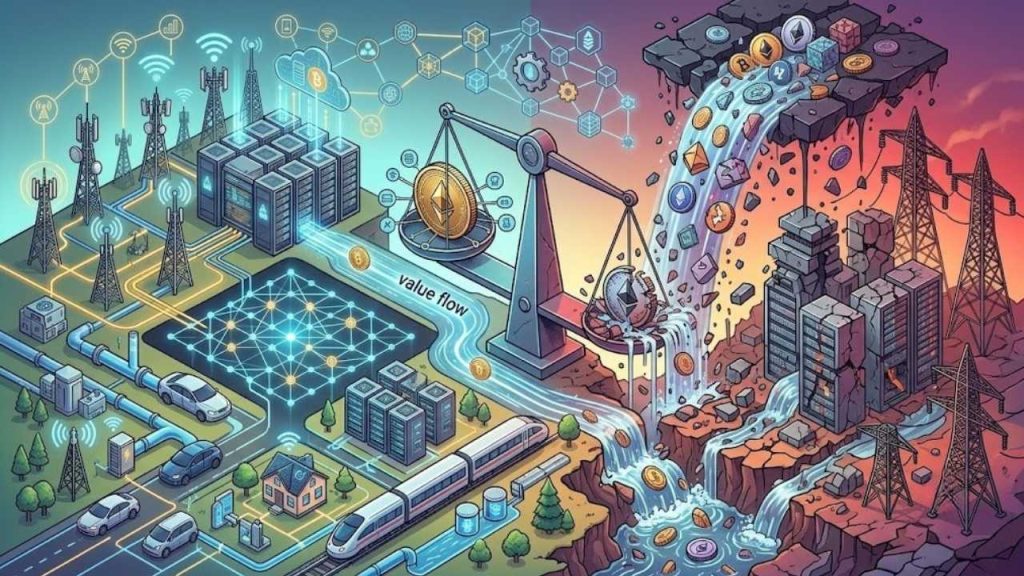
The decentralized physical infrastructure sector faces a highly complex structural dilemma. The dominant narrative suggests that tokens efficiently align supply and demand, but the excess of speculative capital frequently distorts these early markets, prioritizing immediate financial rewards over technological utility.
Observing whether these protocols solve genuine technical shortages or simply create chronic dependencies on subsidies is vital for future operations. Analyzing this complex dynamic effectively determines the true commercial viability of distributed hardware scaling at a fully global level.
This situation matters immensely right now because global demand for computational resources is accelerating rapidly. Major corporations are urgently seeking viable alternatives to traditional providers, demanding robust infrastructures that guarantee constant availability without relying on extreme crypto asset volatility.
When artificial financial returns vastly exceed the intrinsic value of the provided service, corporate adoption fails resoundingly. A true technical disruption requires that the inevitable infrastructure for AI operates stably and establishes deeply sustainable operational models without requiring continuous network subsidies.
Historically, the massive deployment of global telecommunications networks during the nineties relied heavily on enormous initial capital investments. These physical infrastructures were built under heavily centralized schemes, assuming significant financial risks strongly supported by state subsidies and high demand projections.
DePIN currently attempts to replicate this complex initial financing structure through the strictly controlled emission of native tokens. The primary goal is to economically incentivize global individuals to assume the initial capital cost, purchasing and operating technical equipment under financial promises.
However, early decentralized networks like Helium quickly demonstrated that building the supply side does not automatically guarantee sustainable recurring revenues. The network managed to deploy almost one million global nodes, achieving a remarkable success in hardware distribution.
Despite this immense physical deployment scale, initial revenues derived exclusively from actual data transfer utility were marginal compared to token emission. Users operated hardware motivated purely by price appreciation, generating an operational economic asymmetry that remains extremely difficult to correct.
In a very similar manner, the Filecoin protocol aggressively subsidized the early creation of enormous decentralized storage capacity. The network rapidly reached multiple exabytes of physical available space, efficiently coordinating the massive provision of hard drives on a worldwide scale.
Nevertheless, filling that immense storage space with verifiable and commercially useful data required years of additional complex technical development. This specific case revealed that the original incentive primarily attracted miners heavily focused on extracting block rewards, not serious corporate clients.
Differentiating technical utility from financial speculation
More recent models of distributed physical infrastructure show highly significant variations regarding this fundamental operational behavior. Platforms strictly focused on intensive computational calculation, such as Render and IO.net, tie financial payment directly to the executed processing cycle, attempting to mitigate speculative oversupply.
The specific architectural design of modern decentralized cloud computing solutions establishes vastly different commercial dynamics. These innovative platforms operate sophisticated reverse markets where providers actively bid for specific workloads, competing aggressively through low prices for developers.
This highly efficient structure firmly ensures that hardware resource allocation strictly responds to a pre-existing real market demand. By rigorously demanding that clients pay for the service before execution, the harmful operational dependency on pre-programmed token emission is drastically reduced.
The contrary vision firmly maintains that speculative token subsidization represents a purely transitional and absolutely necessary developmental phase. Network builders argue that efficiently overcoming the difficult global cold start problem requires implementing highly aggressive asymmetrical economic incentives during the earliest operational years.
According to this analytical perspective, the already installed hardware will remain permanently connected to the decentralized network once initial capital costs are fully amortized. The underlying theory indicates that massive supply will aggressively force prices down, eventually attracting essential corporate demand.
This highly technical stance holds clear operational validity derived directly from modern economic game theory. Drastically reducing initial capital expenditure barriers through token emission allows decentralized networks to financially compete against massive technological giants, expecting to eventually transition toward pure fee revenues.
However, this highly ambitious transitional thesis is automatically invalidated if continuous high operational costs vastly exceed the collected service fees. If the native network token loses commercial liquidity, highly rational operators immediately disconnect their expensive machines, physically collapsing the infrastructure.
This entirely predictable market behavior empirically demonstrates that the incentive was the only product truly retaining the earliest network participants. The broader implications dictate that all DePIN networks must rigorously evaluate their structural profitability strictly utilizing standard fiat currency metrics.
A distributed graphical processing or decentralized storage provider must successfully cover inescapable monthly operational costs regarding electricity, high-speed connectivity, and hardware depreciation. These firm financial obligations exist entirely independently of internal protocol monetary policy or broader ecosystem speculative market narratives.
If the organic revenues derived exclusively from direct payment for provided digital services manage to successfully cover seventy percent of main node operational expenses over the next twelve months, the economic DePIN model will finally validate its long-term structural sustainability.
Conversely, if technological networks continue depending predominantly on constant token inflation mechanisms to keep hardware operators financially profitable, these specific protocols will face an inevitable massive migration of structural providers toward much more stable or strictly traditional centralized cloud systems.
The comprehensive analysis presented within this document strictly serves purely informational purposes regarding the technological evolution of the sector. This specific article does not constitute financial advice, and independent research is highly recommended before interacting with any decentralized physical infrastructure platforms.