
Iran Airspace Closure Odds: 66.5% Chance by June 30, 2026, Up to 75% by Year‑End
This market will resolve to “Yes” if Iran initiates a major closure of its airspace, that is not solely due to weather conditions, between June 9, 2026, 3:00…
Iran closes its airspace by...?
Several deadline markets are grouped under one Polymarket event. Closed dates are archived; the live view focuses only on active deadlines.
Price, depth and useful dates
An editorial view of the signal: what leads, how much activity is behind it, and which date carries the risk.
Deadline map
What is happening now
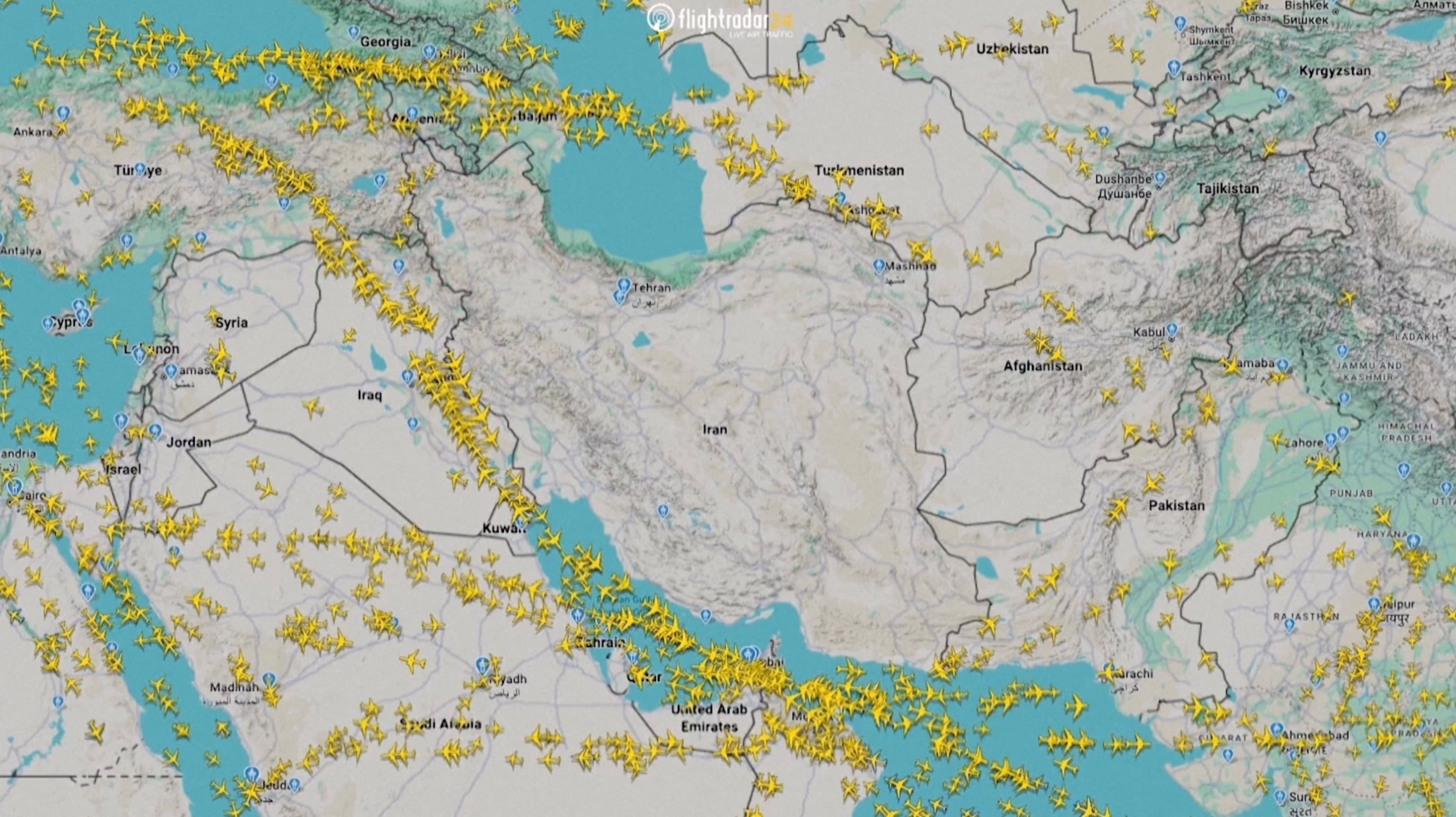
As of June 14 2026, traders on Polymarket are pricing a series of binary contracts that ask whether Iran will impose a “major” airspace closure (broad suspension of commercial flights affecting at least two of Iran’s five main international airports) by a series of future dates. The immediate contract – “Will Iran close its airspace by June 14?” – shows a No price of $0.64 (64 % implied probability) and a Yes price of $0.36 (36 %). The market opened on June 9 2026 at 3:00 PM ET and will close at 11:59 PM ET on June 15 2026; a Yes resolution requires a non‑weather‑related closure that begins anytime between those timestamps.
Recent price moves in related contracts suggest that geopolitical tension is the dominant driver. On June 7 2026, Israel reported that Iran launched a missile at Israeli territory, the first such claim since a fragile April cease‑fire, and U.S. forces downed Iranian drones over the Strait of Hormuz the same day. Those events caused a sharp spike in the June 8 contract, pushing its Yes price to near‑certainty (99.6 %) before the contract expired without a confirmed closure. The same headlines lifted adjacent mid‑June contracts (June 10‑June 15) toward higher Yes probabilities, though they have since retreated as the June 8 window passed without an official Iranian aviation notice or credible reporting of a broad flight suspension.
No official Iranian civil‑aviation announcement or consensus of reputable wire services (Reuters, AP, AFP) has confirmed a closure that meets the market’s definition since June 9. Consequently, the later‑dated contracts now reflect a balance between the perceived risk of renewed hostilities and the passage of time without a triggering event.
How the market is structured
The Polymarket event “Iran closes its airspace by…?” is a date ladder: a set of independent binary markets, each with the same resolution criteria but a different deadline. Traders can buy Yes or No shares for any of the following dates:
- June 10 2026 (closed – No at 100 %)
- June 11 2026 (closed – No at 100 %)
- June 12 2026 (closed – No at 100 %)
- June 13 2026 (closed – No at 100 %)
- June 14 2026 (open – No leading at 64 %)
- June 15 2026 (open – No leading at 59.1 %)
- June 30 2026 (open – No leading at 51 %)
- July 15 2026 (open – No leading at 50.5 %)
- July 31 2026 (open – Yes leading at 54.5 %)
- August 31 2026 (open – Yes leading at 53 %)
- December 31 2026 (open – Yes leading at 62.5 %)
Each market resolves Yes if Iran initiates a major, non‑weather airspace closure at any time between June 9 2026 3:00 PM ET and the market’s listed deadline; otherwise it resolves No. The primary resolution sources are official notices from Iran’s Civil Aviation Organization and a consensus of credible reporting (e.g., Reuters, AP). The event’s “display model” highlights the June 14 contract as the primary market, with No as the leading side at 64 % probability.
Path to the leading outcome
For the June 14 market, the leading outcome is No. A No resolution will occur if, between June 9 3:00 PM ET and June 15 11:59 PM ET, Iran does not issue a broad airspace suspension affecting at least two of the five major airports (IKA, THR, MHD, SYZ, IFN). In practice, this means:
- No official NOTAM or AIC from Iranian aviation authorities announcing a closure of commercial flights.
- No simultaneous reporting from multiple reputable outlets (Reuters, AP, AFP, major aviation news services) confirming a suspension of arrivals/departures at two or more of those airports.
- Any flight disruptions that are limited to a single airport, are weather‑related, or consist only of delays/cancellations do not qualify.
Thus, the path to the leading No outcome is simply the continuation of the status quo: no escalation that triggers a nationwide or multi‑airport flight ban, and no credible evidence of such a ban appearing in official or media channels.
What could change the pricing
Several concrete developments could shift the market away from its current No‑leading stance:
- Escalation of Iran‑Israel hostilities: A confirmed Iranian missile or drone strike on Israeli territory, followed by an Iranian statement citing security concerns and a subsequent NOTAM closing airspace, would likely trigger a Yes resolution for the nearest open deadline (June 14 or June 15). The June 8 spike showed how quickly such news can move prices.
- U.S. or allied military action: Direct U.S. strikes on Iranian assets, or a multinational interdiction operation that prompts Iran to close its airspace as a protective measure, would also satisfy the closure criteria.
- Broader regional conflict: If Iran’s airspace closure is announced as part of a wider mobilization (e.g., in response to a perceived threat to its nuclear sites or naval forces), the closure would likely be broad enough to affect multiple major airports.
- Official Iranian aviation notice: Even without explicit geopolitical triggers, an Iranian civil‑aviation NOTAM citing “operational safety” or “airspace management” that results in a genuine suspension of commercial flights at two or more of the listed airports would resolve Yes.
- De‑escalation or diplomatic progress: Conversely, a credible cease‑fire, confidence‑building measures, or a verified de‑escalation signal (e.g., withdrawal of forces, diplomatic talks yielding a temporary lull) would reinforce the No case and could push the Yes price lower, especially for the nearer‑term contracts.
- Passage of time without triggering news: As each deadline passes without a closure, the market’s Yes price for that date collapses to zero (as seen for the June 10‑June 13 contracts). For later dates, the Yes price will gradually decay if no new risk emerges.
Editorial read
The June 14 contract sits at the front of an active date ladder that has seen intense, headline‑driven volatility in recent days. With $790 k of total volume and $671 k traded in the last 24 hours, the market is liquid enough for sizable moves, yet the current No price of 0.64 reflects a consensus that the June 7‑June 8 flare‑up did not produce a lasting airspace shutdown. The market’s structure—binary outcomes tied to specific calendar dates—means that each contract’s price is a direct read‑on‑the‑perceived probability of a closure occurring before that date.
Because resolution hinges on official Iranian notices or a consensus of credible reporting, traders are effectively betting on the likelihood of a geopolitical trigger strong enough to compel Iran to issue a broad, non‑weather NOTAM. The fact that the June 8 contract spiked to near‑certainty and then collapsed without a confirming notice underscores the market’s sensitivity to unverified rumors; only substantiated official sources can lock in a Yes.
Looking forward, the leading No outcome for June 14 will hold unless a new, verifiable event—most plausibly a missile strike, drone exchange, or U.S. military action—promptly leads to an Iranian aviation authority announcement that disrupts flights at two or more of Iran’s major international airports. Absent such a development, the probability mass will continue to shift toward the later‑dated contracts, where Yes currently leads for July 31 (54.5 %), August 31 (53 %), and December 31 (62.5 %), reflecting a belief that, if a closure occurs, it is more likely to happen later in the year as tensions evolve.
This analysis is provided for informational and editorial purposes only. Market signal prices reflect market-implied expectations, not verified outcomes or recommendations. Markets can be illiquid, volatile, and subject to ambiguous resolution criteria.