
Will Iran Fully Close Its Airspace by July 15? Market Odds and Deadlines
This market will resolve to “Yes” if Iran initiates a general closure of its airspace, that is not solely due to weather conditions, between market creation and the…
Iran full airspace closure by...?
Several deadline markets are grouped under one Polymarket event. Closed dates are archived; the live view focuses only on active deadlines.
Price, depth and useful dates
An editorial view of the signal: what leads, how much activity is behind it, and which date carries the risk.
Deadline map
What is happening now
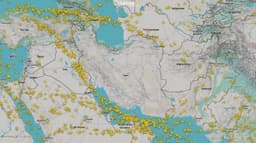
As of early July 2026, Iranian airspace is operating without a comprehensive, weather‑unrelated shutdown that meets the criteria defined by the Polymarket question. Commercial flights continue to arrive and depart from the five key airports listed in the market description – Imam Khomeini (IKA), Mehrabad (THR), Mashhad (MHD), Shiraz (SYZ) and Isfahan (IFN) – and flight‑tracking data from Flightradar24 shows normal traffic levels. The Iranian Civil Aviation Organization has not issued any NOTAM or public notice indicating a blanket closure of the Tehran Flight Information Region (FIR). The most recent official statements, including a Reuters report from July 2, confirm that “Iran’s airspace remains open for all scheduled commercial operations.” No new airspace‑restriction notices have been published by the authority since the February 28, 2026 total closure, which was limited to a single day and was followed by a rapid return to regular service.
How the market is structured
The market is a date‑ladder that groups four related binary markets under a single event titled “Iran full airspace closure by…?”. The active markets are:
- June 30 2026 – closed and resolved to “No”.
- July 15 2026 – currently open, with a “No” price of 0.905 and a “Yes” price of 0.095.
- July 31 2026 – open, “No” price 0.85, “Yes” price 0.15.
- August 31 2026 – open, “No” price 0.75, “Yes” price 0.25.
Each market resolves to “Yes” only if Iran initiates a general closure of its airspace that is not weather‑driven and that affects commercial traffic across the Tehran FIR, meeting the threshold of at least two of the five listed airports. The market’s resolution will be based on official announcements from the Iranian aviation authority and a consensus of credible reporting. The platform shows a date‑ladder layout where the July 15 market is the primary market, carrying the highest probability weight (90.5 % “No”).
Path to the leading outcome
The market’s current leader is the “No” outcome for the July 15 deadline. For this outcome to be realized, Iran must avoid any broad, non‑weather‑related shutdown before 23:59 ET on July 15, 2026. A qualifying closure would require an official notice that suspends arrivals and departures at two or more of the specified airports across the entire Tehran FIR. The only recent examples that meet this definition are the January 2026 total closure and the February 28, 2026 total closure, both of which were publicly announced and resulted in a temporary halt of most commercial flights. Since neither of those events has recurred in the weeks leading up to July 15, the market’s “No” price remains high.
What could change the pricing
Several concrete triggers could shift the odds away from the current “No” leader:
- Official NOTAM or civil‑aviation statement announcing a blanket suspension of commercial flights in the Tehran FIR, especially if it references at least two of the five airports.
- A new airspace directive that extends the scope of the February 28 closure to a longer period or adds additional airports to the list of affected sites.
- Significant geopolitical escalation that prompts Iran to close its airspace for security reasons, as occurred in the January 2026 episode.
- Credible reports from aviation data providers (e.g., Flightradar24, Bloomberg) documenting a sudden, widespread cancellation of arrivals/departures at multiple listed airports.
Any of these events would likely cause the “Yes” price to rise and the “No” price to fall, reflecting the market’s adjustment to new information.
Editorial read
The Polymarket event is structured as a date‑ladder where each successive deadline (July 15, July 31, August 31) shares the same underlying question but carries a progressively lower “Yes” price and a correspondingly higher implied probability of “No”. The July 15 market dominates liquidity, with a 90.5 % “No” probability and a $203k 24‑hour volume, indicating that traders collectively view a full, non‑weather‑related airspace closure before mid‑July as unlikely. This assessment is grounded in the absence of any official Iranian announcement and the continued normal flight activity observed through July 2. While the market is still open for trading, the price dynamics suggest limited upside for the “Yes” side unless a concrete, government‑issued closure notice emerges before the July 15 deadline. Consequently, the market’s current pricing reflects a high confidence that Iran will keep its airspace open for commercial aviation through at least mid‑July 2026.
This analysis is provided for informational and editorial purposes only. Market signal prices reflect market-implied expectations, not verified outcomes or recommendations. Markets can be illiquid, volatile, and subject to ambiguous resolution criteria.