
Lindsay Clancy convicted of murder by…?
Lindsay Clancy has been charged by The Commonwealth of Massachusetts with three counts of murder for the death of her three children. You can read more about that…
Lindsay Clancy convicted of murder by...?
Several deadline markets are grouped under one Polymarket event. Closed dates are archived; the live view focuses only on active deadlines.
Price, depth and useful dates
An editorial view of the signal: what leads, how much activity is behind it, and which date carries the risk.
Deadline map
What is happening now
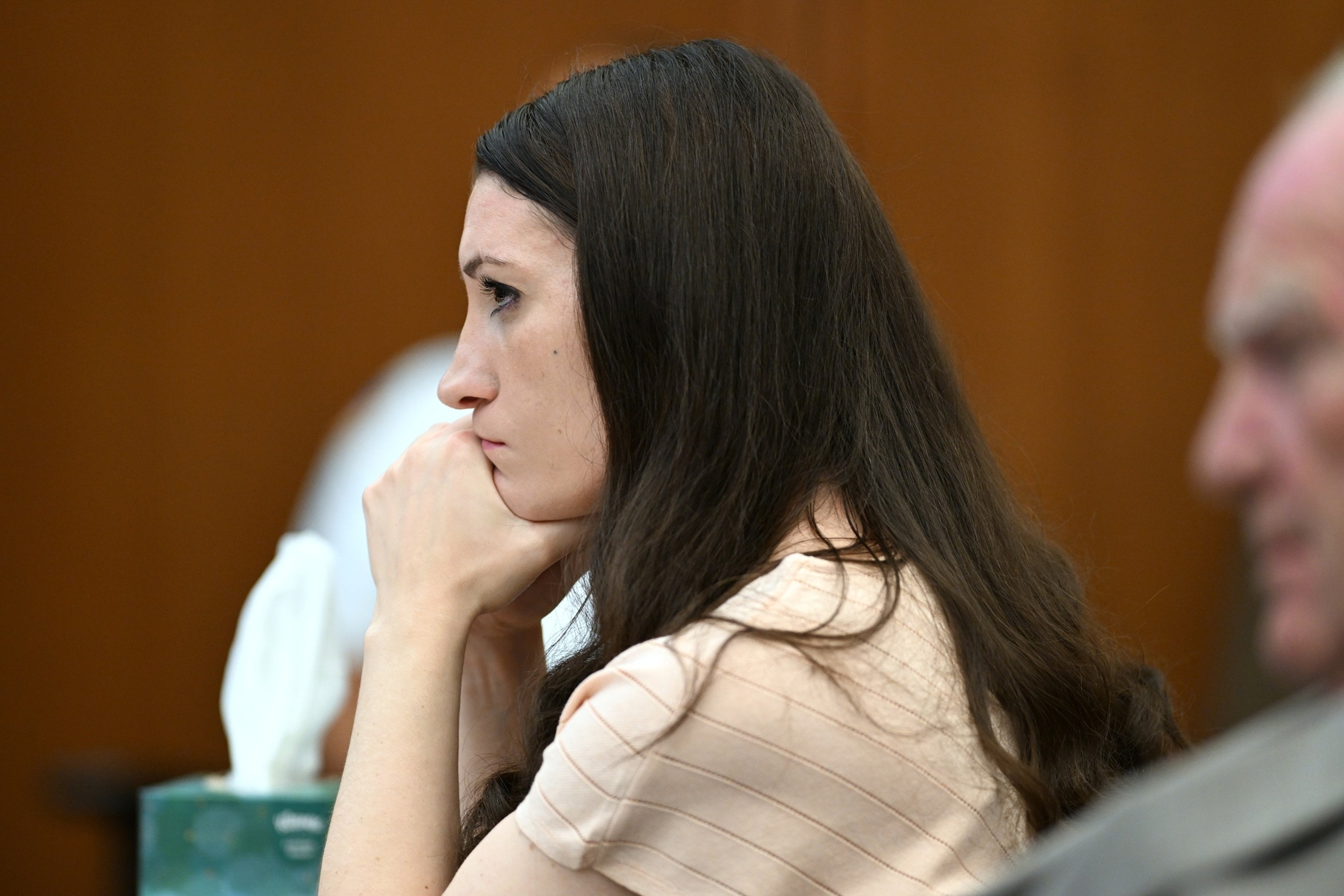
Lindsay Clancy, a former Massachusetts nurse, remains under indictment for the January 2023 deaths of her three children. She has pleaded not guilty by reason of insanity, and the case has proceeded through a series of competency hearings and pre‑trial motions. As of the most recent publicly available reports (mid‑2024), no trial date has been set, and the court has not rendered a verdict or accepted a plea that would constitute a murder conviction. The Commonwealth continues to prepare for trial, while the defense continues to pursue mental‑health‑related defenses. Because a conviction has not yet occurred, the Polymarket markets that ask whether she will be convicted of murder by the end of 2026 or 2027 show a strong bias toward the “No” outcome.
How the market is structured
This Polymarket event is a date ladder consisting of two linked binary markets:
- Lindsay Clancy convicted of murder by December 31, 2026? – resolves “Yes” if a murder conviction (including a guilty plea that results in a judgment of conviction) occurs on or before 23:59 ET on 31 Dec 2026; otherwise resolves “No”.
- Lindsay Clancy convicted of murder by December 31, 2027? – identical logic, but with the deadline extended to 31 Dec 2027.
The market treats each date as an independent outcome; a conviction before the earlier date would cause both markets to resolve “Yes”, while a conviction only after 2026 but before 2027 would cause the first market to resolve “No” and the second to resolve “Yes”.
Current prices (as of the latest update) show:
- For the 2026 market: “No” at 0.957 (95.7 % probability), “Yes” at 0.043 (4.3 %).
- For the 2027 market: “No” at 0.775 (77.5 % probability), “Yes” at 0.225 (22.5 %).
Thus the leading outcome across both dates is “No”, reflecting market skepticism that a murder conviction will be reached by either deadline.
Path to the leading outcome
For the leading “No” outcome to prevail in each market, the following must occur before the respective deadline:
- The case ends in an acquittal (judgment of not guilty) on all murder charges.
- The charges are dismissed or reduced to non‑murder offenses.
- A mistrial is declared and no retrial is scheduled to begin before the deadline.
- A plea agreement is entered that does not result in a judgment of conviction for murder (e.g., a plea to a lesser offense).
- The defendant is found not guilty by reason of insanity, which under the market rules counts as a “No” outcome because no judgment of conviction for murder is rendered.
In short, any resolution that avoids a formal conviction for murder before the cutoff preserves the “No” position.
What could change the pricing
Specific developments that would shift probability toward the “Yes” side include:
- A guilty verdict on at least one murder charge delivered by a jury or judge before the deadline.
- A guilty plea that the court accepts as a conviction for murder (e.g., plea to first‑ or second‑degree murder).
- A mistrial followed by a retrial that commences and concludes with a conviction before the deadline.
- New evidence or testimony that dramatically strengthens the prosecution’s case, increasing the likelihood of a conviction.
- A ruling on competency or mental‑health defenses that clears the way for trial to proceed without further delay.
Conversely, any delay in scheduling trial, a successful insanity defense, or a plea to a non‑murder charge would reinforce the current “No” pricing.
Editorial read
The market’s current pricing reflects a strong consensus that Lindsay Clancy will not be convicted of murder by the end of 2026, with a somewhat lower but still substantial confidence that she will avoid conviction through the end of 2027. This outlook aligns with the publicly known procedural posture of the case: competency evaluations, extensive pre‑trial litigation, and the complexity of an insanity defense have repeatedly postponed trial proceedings. The sizable trading volume—over half a million dollars in total volume and nearly a quarter‑million in the past 24 hours—indicates active interest from participants who are weighing the evolving legal developments against the fixed deadlines.
Liquidity remains healthy, especially for the nearer‑dated market, which suggests that traders can enter or exit positions without excessive slippage. The resolution mechanism relies on an official court judgment; absent that, credible reporting may be used, which adds a layer of dependence on timely and accurate news coverage. As the September 2026 timeframe approaches, any movement toward setting a trial date or a shift in the defense’s strategy will be closely watched, as it could rapidly adjust the probabilities away from the current “No” dominance. Until such a change occurs, the market continues to signal that, based on the information available today, a murder conviction before the end of 2026 is considered unlikely.
This analysis is provided for informational and editorial purposes only. Market signal prices reflect market-implied expectations, not verified outcomes or recommendations. Markets can be illiquid, volatile, and subject to ambiguous resolution criteria.