
US charges Hormuz fees by…?
This market will resolve "Yes" if the United States government collects a payment from any shipping company, vessel, foreign government, or other relevant entity as a fee, toll,…
US charges Hormuz fees by...?
Several deadline markets are grouped under one Polymarket event. Closed dates are archived; the live view focuses only on active deadlines.
Price, depth and useful dates
An editorial view of the signal: what leads, how much activity is behind it, and which date carries the risk.
Deadline map
What is happening now
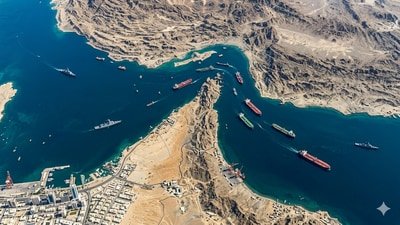
July 2026 is witnessing a sharp escalation between the United States and Iran that is reverberating through global energy markets. After a series of U.S. strikes that began on July 14, Iran retaliated with ballistic missile strikes on a U.S. airbase in Jordan and attacked two tankers in the Strait of Hormuz, killing an Indian mariner and wounding eight others CBC News. The conflict has already cut Strait‑of‑Hormuz traffic by roughly 52 % AINvest, threatening the flow of more than 15 million barrels of oil daily—about a fifth of world supply.
Concurrently, President Trump announced a dramatic policy reversal: the previously‑proposed 20 % “United States Reimbursement Fee” on cargo transiting the strait has been replaced by a framework of investment and trade deals with Gulf states AP News. The United Nations shipping agency, which opposes any tolls on international straits, has warned that there is no legal basis for mandatory fees CBC News. The latest round of fighting has also prompted experts to call for a larger U.S. military presence to secure the waterway AP News. In this environment, the Polymarket event “US charges Hormuz fees by July 17, 2026?” is priced at a 98.5 % probability that no fee will have been collected by that date.
How the market is structured
The event is a **date‑ladder market** comprising four binary sub‑markets, each tied to a specific deadline: July 17, July 31, August 31, and December 31, 2026. Every sub‑market asks the same Yes/No question—whether the U.S. government has collected any payment (monetary or in‑kind) as a fee, toll, or reimbursement for Strait‑of‑Hormuz transit or protection by the listed cut‑off (11:59 PM ET). The resolution requires **actual receipt of payment**, not merely an executive order or regulatory framework.
Currently the **“No” side dominates** across all four dates, with probabilities of 98.5 % (July 17), 95.5 % (July 31), 92.3 % (August 31), and 87.5 % (December 31). The July 17 market is the primary driver of the event’s headline, reflecting the shortest horizon and highest market attention. Liquidity is concentrated in the July 17 and July 31 contracts, indicating that traders are most focused on the immediate risk window.
Path to the leading outcome
For the “No” outcome to materialize, the United States must **avoid any enforceable fee collection** through each deadline. The recent reversal of the 20 % toll plan—replaced by trade‑and‑investment agreements—provides a concrete policy signal that no such fee will be imposed. Moreover, the UN’s opposition and the lack of any new legislation or executive action further reduce the likelihood of a fee being enacted.
Additionally, the ongoing conflict has disrupted shipping lanes, making it operationally difficult for the U.S. to enforce a new toll without provoking further retaliation. The market’s structure, which requires **actual payment receipt
This analysis is provided for informational and editorial purposes only. Market signal prices reflect market-implied expectations, not verified outcomes or recommendations. Markets can be illiquid, volatile, and subject to ambiguous resolution criteria.