Were Bitcoin Ordinals and BRC-20 Tokens Just Hype? Analysis of Their Future
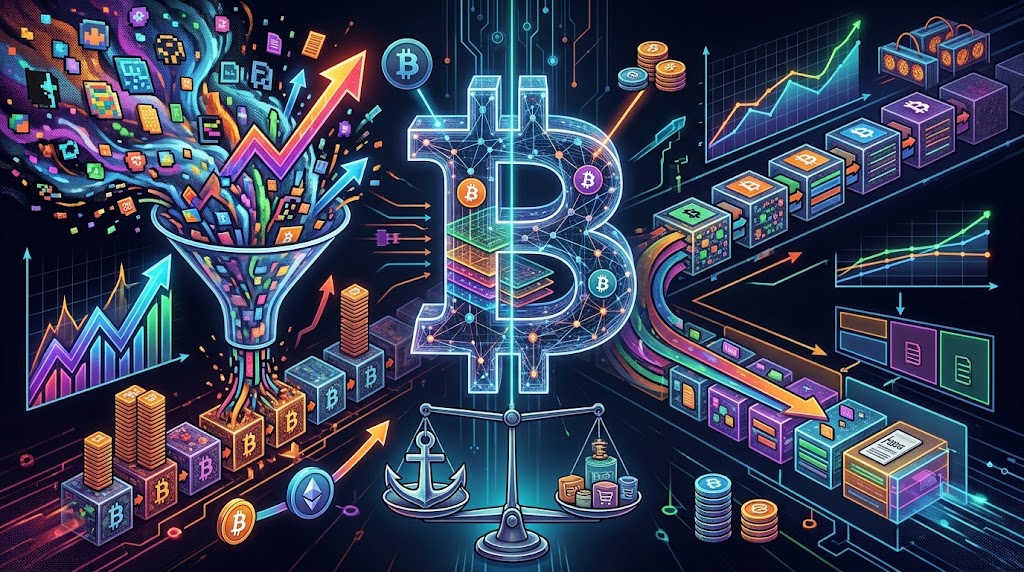
The assumption that inscriptions were merely a fleeting speculative bubble underestimates the network’s fundamental structural transformation. As detailed in the official Ordinals handbook, ordinal theory assigns a deterministic numerical order to each satoshi, enabling digital artifacts to be cataloged and tracked directly on the base chain without altering core consensus rules.
This technical transition gains immediate significance given the programmatic reduction in the block mining subsidy. Assessing whether this activity represented transient euphoria or enduring baseline blockspace demand is essential for evaluating the long-term economic security model that sustains the entire network.
During the peak adoption periods in 2023, the exponential surge in fees reshaped baseline transaction economics. According to the Binance Research primer, continuous minting of experimental BRC-20 tokens drove fee totals to levels that temporarily eclipsed the standard block reward received by mining facilities.
This phenomenon demonstrated clear economic willingness to purchase blockspace for non-monetary applications, providing alternative revenue streams for validation operators at times when standard financial transfer volume remained relatively flat across the distributed ledger system.
Excessive early speculation drove unsustainable valuations across low-quality digital collections. In the Galaxy Research report, analysts projected that the ecosystem would gradually consolidate around high-value numismatic artifacts with verified provenance, reducing the dominance of repetitive JSON text deployments that flooded the mempool.
After reaching multi-million-dollar daily trading volumes, speculative activity dropped by more than seventy percent from historical peaks, clearing transient projects without technical utility and stabilizing the computational overhead required to propagate blocks across global validation nodes.
On-chain metrics from the Dune analytics dashboard show that despite lower speculative volumes, cumulative inscriptions surpassed tens of millions of records, establishing a permanent and immutable digital archive that continues to expand at a steady and predictable rate.
Historical evolution and economic model sustainability
Storing arbitrary metadata is not an unprecedented concept on the network. Early initiatives like Colored Coins in 2013 and Counterparty in 2014 attempted custom asset issuance, but faced severe capacity constraints and relied on inefficient OP_RETURN data structures within transactions.
The core difference lies in contemporary ledger architecture. The SegWit upgrade in 2017 and Taproot in 2021 enabled arbitrary data placement directly inside the witness field, benefiting from a seventy-five percent discount relative to traditional transaction data weights.
This structural foundation cements the technical distinction from past cycles, proving that Bitcoin can host immutable records without inflating the unspent transaction output database as severely as early experimental protocols did during the previous decade of development.
The broader ecosystem rapidly recognized the operational inefficiencies of the BRC-20 standard, which uses plain JSON text and requires separate individual transactions for deployment, minting, and transfers, creating severe congestion and mempool friction across the network.
These constraints spurred the creation of more efficient token frameworks, such as Runes and lightweight metaprotocols, designed to significantly reduce the data footprint while maintaining reliable satoshi-level tracking capabilities on top of the foundational base layer.
The shift from experimental inscriptions toward optimized metaprotocols exemplifies standard software engineering maturation, where developers adapt underlying tooling to extract the highest possible information density for every unit of block weight consumed during broadcast.
Structural counterpoints and future adoption outlook
Critics of this technology consistently emphasize the impact on network decentralization. They argue that storing non-monetary images and media accelerates ledger storage growth, raising hardware costs and making full-node operation significantly harder for regular individual users worldwide.
This counterpoint holds technical merit: if full-node validation requirements expand too rapidly, fewer independent operators will maintain complete historical copies of the ledger, ultimately weakening censorship resistance and compromising the decentralized security guarantees of the entire system.
The obsolescence argument would be validated if transaction fee pressure permanently crowds out ordinary monetary payments, or if a broad consensus emerges among core developers and miners to restrict witness field inscriptions through client-level soft fork modifications.
Nevertheless, miners maintain strong economic incentives to confirm these transactions, as supplemental fee revenue effectively offsets the diminishing block subsidy resulting from regular halving events, ensuring hashrate sustainability over longer time horizons.
User behavior indicates that the preservation of immutable data addresses a distinct institutional and cultural niche in the global market, differentiated from smart contract chains by its deterministic permanence, execution simplicity, and absence of external token dependencies.
Long-term viability will depend on integration with layer-two networks capable of handling high-velocity asset transfers off-chain, reserving the main chain strictly for final settlement guarantees and the secure long-term anchoring of high-value digital artifacts.
The ecosystem has moved past its initial speculative euphoria into a period of technical refinement, where only applications offering genuine economic and archival utility will withstand the competitive pricing of permanent blockspace over the long term.
If inscription and metaprotocol transactions consistently account for more than twelve percent of total miner fees over the next twenty-four months without impairing basic monetary transfer capacity, the technology will have demonstrated lasting structural and economic viability.
This article is for informational purposes only and does not constitute financial advice.