The Dollar’s Unofficial Sheriff: Tether, Sanctions Geopolitics, and the End of the Neutral Myth
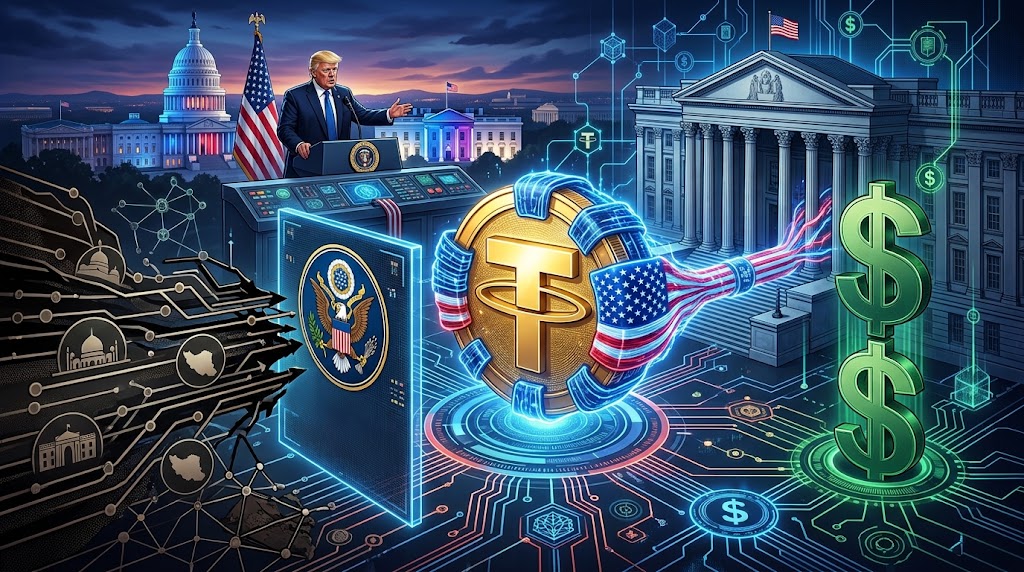
The cryptocurrency sector initially built its public appeal upon promises of censorship resistance and borderless settlement. Today, however, Tether operates transparently as an enforcer of sovereign financial sanctions advancing the strategic foreign policy priorities established by the United States Treasury.
The targeted freezing of nearly 550 million dollars in USDT connected to Iranian trade networks shatters conventional assumptions regarding stablecoin neutrality. This development matters because it coincides with intensified Western efforts to restrict shadow banking channels across the Middle East.
Cumulatively, Tether has blocked nearly five billion dollars across multiple jurisdictions worldwide. This staggering figure positions the private offshore stablecoin issuer as a more aggressive enforcement mechanism than many traditional commercial banks operating under domestic legal charters.
Rather than evading regulatory authority, the stablecoin giant routinely complies with directives issued by the Office of Foreign Assets Control. The firm blacklists on-chain wallet addresses proactively before illicit actors can withdraw capital into physical currencies.
This dynamic operates alongside relentless regulatory scrutiny on financial intermediaries, evidenced by United States Senate investigative reports probing whether offshore digital dollar rails inadvertently facilitate clandestine commercial transactions for sanctioned geopolitical adversaries.
The Technological Architecture of Financial Control
The underlying smart contract design on primary host networks such as Tron and Ethereum contradicts common decentralized narratives. The smart contracts governing USDT contain embedded blacklisting routines that freeze token balances instantly through a single programmatic instruction.
Unlike physical cash, which preserves bilateral anonymity and leaves no audit trail, distributed public ledgers permanently record every transfer. Any address transacting with flagged entities is immortalized on-chain, rendering retrospective investigation accessible to forensic analysts.
On-chain analytics platforms leverage this absolute transparency to execute the forensic tracking of sanctioned wallets, mapping state-linked clusters and balance movements with a speed and precision entirely impossible across traditional cross-border correspondent banking rails.
This unprecedented visibility transforms centralized stablecoins into formidable instruments of international financial oversight. Private issuers execute administrative freezing orders unilaterally, leaving affected wallet holders without judicial recourse or conventional due process protections.
Historical parallels to the 1960s Eurodollar market highlight how monetary power functions globally. Offshore dollar deposits flourished beyond the direct regulatory perimeter of the Federal Reserve, yet ultimately deepened worldwide dependence on American currency rather than undermining it.
USDT serves as the modern cryptographic incarnation of the Eurodollar system. It extends the reach of the greenback into developing economies while granting Washington far greater supervisory reach than sovereign paper notes ever allowed.
This operational reality matches official expectations outlined in the illicit finance risk assessment framework released by the United States Treasury, which emphasizes that concentrated dollar-pegged liquidity enables timely regulatory interventions when public security is compromised.
The Structural Tension Between Evasion and Compliance
Critics of this perspective contend that stablecoins still function effectively as evasion mechanisms prior to administrative action. They stress that non-custodial peer-to-peer transfers settle within seconds, allowing sanctioned entities to liquidate balances before compliance teams intervene.
This counterargument holds practical validity because on-chain freezing remains inherently ex-post rather than preventive. While law enforcement agencies construct investigative dossiers, illicit transactions can route capital through automated liquidity pools across multiple decentralized ecosystems.
Nonetheless, the long-term viability of evasion strategies is repeatedly curtailed through federal crypto asset seizure operations, where coordinated law enforcement initiatives neutralize illicit holdings by cooperating directly with smart contract administrators to immobilize targets.
Tether’s prompt collaboration stems from corporate survival instincts. Because the issuer holds the overwhelming majority of its liquid reserves in American Treasury bills verified through every sovereign debt backing reserve audit, the company depends upon the ongoing grace of Wall Street custodians.
Defying an OFAC sanction order would trigger the immediate severance of its banking partnerships and the forfeiture of its asset base. This financial dependency effectively enlists the offshore entity as an auxiliary arm of American statecraft without imposing fiscal burdens on taxpayers.
Consequently, the practical necessity of a domestic retail central bank digital currency diminishes significantly. While an official digital dollar sparks contentious domestic political debates surrounding individual financial surveillance, private stablecoin operators already enforce extraterritorial policy mandates with remarkable efficiency.
This thesis of structural compliance would be invalidated if sanctioned sovereign states successfully migrated their commercial settlements toward immutable decentralized stablecoins lacking freeze mechanisms, or established comprehensive bilateral clearing systems denominated exclusively in alternative national currencies.
However, the unmatched global depth of dollar liquidity continues to pull cross-border trade into dollar-pegged instruments. As long as merchant counterparties demand dollar stability, market participants remain tethered to infrastructure subject to extraterritorial regulatory oversight.
The founding aspiration of a censorship-resistant parallel financial universe has dissolved within the stablecoin economy. Rather than subverting sovereign monetary authority, private dollar tokens have evolved into specialized enforcement mechanisms reinforcing existing global financial hierarchies.
If Western enforcement agencies expand targeted blacklisting requests and private issuers maintain sub-twenty-four-hour execution timelines, the measurable volume of sanctioned transactions conducted through major stablecoins will decline relative to opaque local banking conduits.
This article is for informational purposes and does not constitute financial advice.