Can a Decentralized Network Successfully Compete Today with Traditional Telecommunications Corporations?
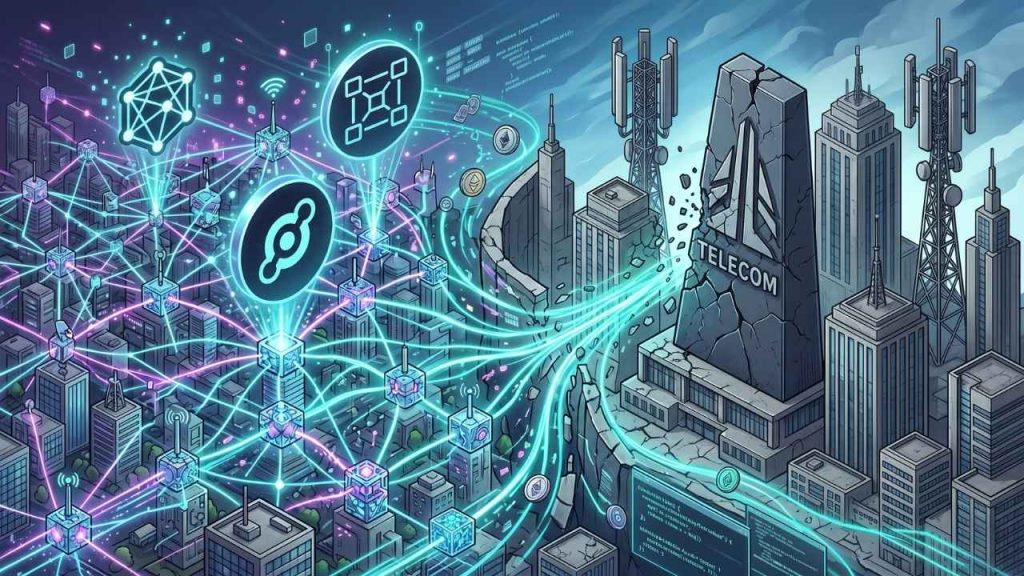
The deployment of decentralized wireless infrastructures challenges the traditional model of global connectivity. Faced with high traditional operating costs, reflected in the GSMA report on spectrum, Helium emerges as a distributed alternative that promises to redefine sector efficiency through direct cryptoeconomic incentives.
This debate gains immediate relevance due to capital saturation in conventional 5G networks. While traditional corporations demand massive subsidies, users actively seek economical options, consolidating a narrative that positions decentralized architecture as the future of mobile telecommunications infrastructure throughout the globe.
To understand this impact, let us examine macroeconomic data from the wireless sector. According to The Mobile Economy 2026 report, mobile technologies generated 7.6 trillion dollars globally in 2025. Competing in this market requires a gigantic scale that Helium attempts to emulate using low-cost community nodes.
Helium’s operating core differs radically from traditional central stations. This network successfully delegates physical infrastructure maintenance to individual users through a blockchain-backed wireless coverage mechanism, significantly reducing those initial capital expenses that typically drown conventional communication corporations nationwide.
The commercial viability of this decentralized scheme is strengthened through corporate strategic alliances. Recently, a key movement was observed when Helium partners with AT&T to bolster American mobile connectivity, demonstrating that institutional coexistence precedes direct market competition in the country.
Historically, mobile virtual network operators have failed by relying entirely on infrastructure leased from large firms. Helium breaks this historical limitation by building its own physical network in a distributed manner, allowing the community to organically finance the expansion of short-range frequencies.
The economic incentive model has demonstrated substantial initial effectiveness in US territory. Previous Nova Labs agreements, detailed in the partnership with T-Mobile, allowed structuring low-cost plans combining community hotspots with traditional national coverage to mitigate areas without direct wireless signal.
Technical Viability and Limitations of the DePIN Model
Despite the enthusiasm, critics argue that community networks present insurmountable structural deficiencies. Traditional telecommunications guarantee a homogeneous quality of service through strict service level agreements, a feature impossible to replicate when network stability depends entirely on individual domestic devices.
This critical stance possesses empirical validity when analyzing the coverage density required for corporate enterprise applications. Decentralized hotspots suffer from connectivity fluctuations due to household factors like blackouts or voluntary disconnections, weakening the reliability necessary for high-speed enterprise critical missions.
Therefore, the thesis of complete replacement would be invalidated if decentralized networks fail to standardize their latency parameters. If users experience continuous data drops, the token’s economic incentive will lose real utility, causing massive abandonment of the wireless community infrastructure.
Technical reality suggests that the global ecosystem is not moving toward destroying traditional monopolies, but toward a technical hybridization of wireless sectors. Large telcos will delegate difficult-to-access areas to decentralized nodes, optimizing their financial balances and reducing accumulated spectrum costs.
Economic Implications for the End User
For consumers, the immediate benefit lies in the reduction of fixed monthly rates. While traditional operators maintain high costs due to spectrum license amortization, decentralized models dilute these fixed expenses among thousands of independent operators who voluntarily assume residential electricity costs.
However, this economic model transfers the financial volatility risk directly onto physical node providers. If the native token value drops drastically, incentives to keep hotspots running disappear, threatening service continuity in critical geographic regions completely devoid of institutional corporate support.
This phenomenon bears similarities to early community internet service providers during the nineteen-nineties. Those independent projects ended up absorbed by conglomerates due to a lack of capital for hardware technological upgrades, a latent risk that Helium seeks to mitigate through efficient migration.
Decentralization offers deployment agility that no traditional board of directors can match in the short term. Modifying or expanding conventional company coverage requires prolonged bureaucratic regulatory approvals, while a motivated community can activate thousands of connection points within a few days.
Operational resilience during natural disasters stands out as another intrinsic advantage of distributed systems. If a conventional central node collapses, thousands of users instantly lose signal, whereas a community mesh network reroutes global wireless data traffic automatically through nearby functional points.
This geographic redundancy mitigates the impact of massive critical failures within connected urban infrastructure. Traditional corporations invest millions of dollars securing backup power plants, an expense that the DePIN ecosystem naturally distributes among its own base of active residential users.
State regulation represents another significant obstacle for distributed networks operating under DePIN. Government agencies demand strict identity and security controls that decentralized architectures struggle to natively implement due to their anonymous nature.
In contrast, traditional companies possess consolidated lobbying channels and historical legal protections. This structural regulatory advantage makes it difficult for community infrastructure to compete equally in massive public connectivity state tenders.
Interface constraints and massive growth in mobile data consumption require urgent heterogeneous solutions. Conventional infrastructure shows signs of economic fatigue in remote rural zones, where corporate return on investment remains completely unfeasible for ordinary shareholders.
It is precisely in those distant geographic margins where decentralization proves its true competitive and social potential. By eliminating costly corporate intermediaries and oligopolistic profit margins, community nodes successfully sustain small-scale profitable operations, effectively democratizing access to modern digital connectivity.
The future evolution of compatible mobile devices will facilitate this gradual technology transition of networks. If technological manufacturers integrate automatic decentralized network selection natively, end users will enjoy reduced rates transparently.
If institutional adoption data continues to stabilize during upcoming fiscal quarters, decentralized wireless architecture will not replace traditional telecommunications companies, but will consolidate as an essential micro-coverage layer to optimize efficiency and reduce operating costs in global mobile traffic.
This article is for informational purposes only and does not constitute financial advice.