Crypto market loses 80 billion following fresh United States strikes
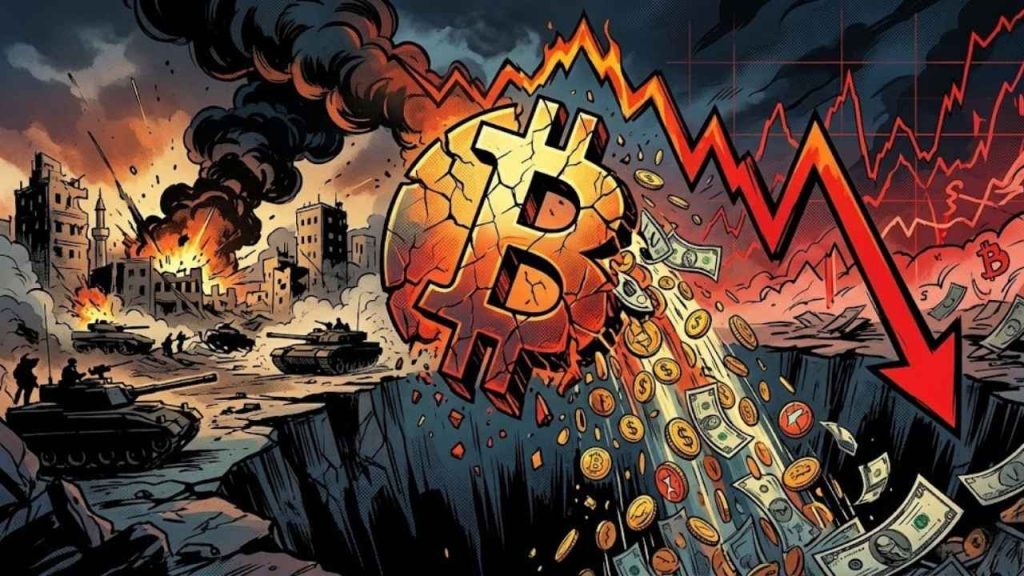
The global digital asset market experienced an accelerated contraction that wiped out 80 billion dollars in capitalization over the past 24 hours. This decline materialized on the night of Wednesday, May 27, 2026, after confirmation emerged that the United States armed forces had executed strikes on military site located within Iranian territory. The military action triggered an immediate displacement of capital toward traditional safe havens, abandoning positions in variable income instruments and cryptographic assets.
According to the information disclosed by the American military command, the operation resulted in the downing of four Iranian combat drones. Defense officials justified the maneuver by stating that these unmanned aerial vehicles represented a direct threat to navigational security and commercial operations around the Strait of Hormuz, a critical maritime route for international hydrocarbon trade.
This recent escalation occurs in an environment of high financial friction, where the United States government had already intensified its economic containment measures. Weeks before this military incursion, the Department of Justice executed operations to track and neutralize alternative financing routes, successfully completing an action that seizes funds in cryptoassets linked to sanctioned entities. These prior actions had generated tension within the liquidity channels of decentralized finance platforms.
Middle East offensive and commodities
Tehran’s response to Wednesday’s offensive was immediate and direct. Through an official statement, Iran’s Islamic Revolutionary Guard Corps confirmed that its military units launched a retaliatory attack targeting an airbase utilized by United States forces located in Kuwait. This direct exchange of fire substantially elevated the geopolitical risk profile across the entire Persian Gulf region.
The confirmation of the Iranian retaliation had a cascading effect on commodity markets during the overnight trading session. The prices of intermediate oil from West Texas (WTI) registered an advance of 3.5%, surpassing the mark of 92 dollars per barrel. In parallel, Brent crude reached valuations of 98 dollars, reflecting institutional operators’ fears regarding potential disruptions to the global energy supply chain.
These military clashes interrupt the diplomatic negotiations that sought to establish a definitive ceasefire for the war that began on February 28, 2026, which originated from joint operations by the United States and Israel. During a cabinet meeting held on the same Wednesday at the White House, President Donald Trump expressed his dissatisfaction with the preliminary terms of the proposed peace agreement and suggested the viability of authorizing additional military measures if his security demands were not met.
Downswing across order books
In the cryptocurrency spot market, the impact of geopolitical uncertainty was immediately reflected across major order books. Bitcoin registered a daily drop of 3.5%, which pushed its trading price down to 72,646 dollars on the Coinbase exchange. This valuation level represents the lowest point for the asset since April 13, invalidating the recovery structure the market had built earlier in the week based on peace expectations.
The selling pressure in spot markets is exacerbated by internal structural factors within the mining industry. Facing the compression of profitability margins derived from sustained volatility, several Bitcoin mining companies have begun reallocating their computational infrastructure toward artificial intelligence processing. This operational diversification coincides with the stalling of pro-crypto legislation in the US Congress, adding a layer of regulatory uncertainty to a market already battered by the macroeconomic landscape.
The volatility induced by the conflict triggered a cascade effect on derivatives markets, severely affecting leveraged operators. The rapid decline in valuations activated forced liquidations across multiple platforms. This abrupt downside movement contrasts sharply with the dynamics observed days prior, when the market experienced a massive liquidation of positions in short contracts that artificially pushed prices upward, demonstrating the structural vulnerability of current liquidity against external shocks.
Ether also suffered a significant contraction as a direct reaction to the military reports. The digital asset fell more than 4% during Asian trading hours, breaking through the 2,000-dollar support level to temporarily settle at 1,976 dollars. This correction places the native token of the Ethereum network at its most depressed valuation levels since late March of the current year.
The price response to the developing military conflict highlights a temporary shift in institutional perception. Both Bitcoin and Ether are operating with a direct correlation to traditional risk assets, reacting downward to uncertainty. The narrative of these assets as independent hedges is paused while investors prioritize US dollar liquidity ahead of potential monetary policy adjustments.
Researchers from the analysis firm LVRG documented that the reduction of liquidity on major exchanges is exacerbating price movements. The financial ecosystem is currently waiting for official damage reports to be issued by the Department of Defense regarding the facilities in Kuwait, a data point that will determine the magnitude of the next market oscillations.
This article is for informational purposes only and does not constitute financial advice.