Technical composability threatens stability: is systemic risk in DeFi an inevitable outcome?
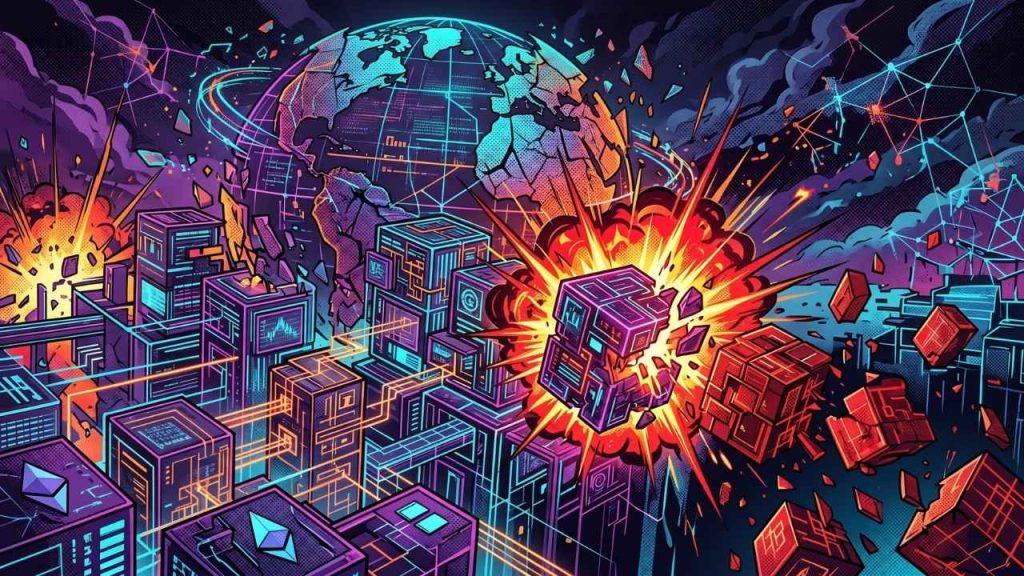
The technical interconnectivity of smart contracts ensures that systemic risk in DeFi ceases to be a theoretical possibility immediately. A technical failure in a single protocol can trigger automatic liquidations that compromise the solvency of massive lending platforms today.
We challenge the view that security incidents are isolated events without significant external impact on others. This thesis is vital today given the concentration of collateral in synthetic assets lacking sufficient liquidity according to an official report on stability.
Technical modularity multiplies financial contagion between interconnected protocols
The modular architecture allows deposited assets to act simultaneously across multiple technical layers of execution. The use of liquidity pool participation tokens as primary collateral creates direct dependencies between them. A successful attack drains the fundamental liquidity of a specific asset in seconds.
When a protocol suffers a fund drain, the market value of its associated assets collapses instantly. Oracle price feeds must update values quickly to reflect the loss of parity. This process triggers forced execution of positions in global decentralized credit platforms within the ecosystem.
Platforms like Aave depend on the ability of liquidators to absorb unpaid debts very quickly. In the official technical text, extreme volatility reduces operational efficiency. Bad debt accumulates within the lending protocol without an immediate technical remedy or fix.
This phenomenon worsens when the attacked asset serves as collateral for loans in other stable cryptocurrencies. The price drop generates panic that encourages massive liquidity withdrawals throughout the financial ecosystem online. The technical event turns into a systemic financial solvency problem for all.
Extreme composability means that a vulnerability in a shared library can affect many different applications. Aave’s code does not need to fail for its liquidity to be drained by toxic external assets automatically today. Interdependence remains the most critical vulnerability of the entire decentralized system.
If an exploit allows infinite minting of a token used as collateral, attackers can empty pools. This technique allows extracting high technical quality assets while leaving behind worthless tokens easily. The execution speed of these attacks exceeds human capacity for administrative or manual response.
Can the current infrastructure resist a global systemic liquidity crisis?
The core of this problem lies in exit friction during sharp price decoupling events. Protocols cannot unilaterally suspend operations without permanently compromising their decentralization or trust. The lack of a global emergency kill switch accelerates the spread of financial risk.
An exclusive analysis reveals that liquidity fragmentation across scaling layers worsens the structural crisis. Liquidators face high transaction costs on congested networks during technical attacks or spikes. This operational inefficiency prevents the market from stabilizing before a total financial collapse.
Synchronizing price feeds through decentralized networks such as those managed by Chainlink is crucial. However, if the original data source is manipulated, the system fails completely. Reliance on external prices introduces an attack vector that users habitually ignore during operations.
Historically, events like the exploit analysis of Curve Finance demonstrated serious compiler failures. The Vyper vulnerability put millions of dollars at risk in various interconnected pools. The difference was the speed of contagion between collateralized debt markets directly linked.
Those who defend the absolute security of these systems argue that security modules protect users. The Aave Safety Module uses locked tokens to cover extreme financial deficits effectively. This mechanism may have partial validity if the liquidation is contained and not massive.
Nevertheless, in a total contagion scenario, the value of the governance token also tends to plummet. Financial backing vanishes just when the system most needs to ensure the solvency of its credit vaults effectively now. Internal protection proves insufficient in the face of a vertical global drop.
The decentralized financial environment requires a deep review of the dynamic risk parameters applied today. Implementing automatic risk adjustment algorithms could mitigate the negative impact of exploits. However, the technical complexity of these solutions delays their massive and safe adoption.
We observe that the correlation between synthetic assets increases the fragility of primary liquidity pools. When an asset loses parity, arbitrage mechanisms systematically fail under extreme market pressure conditions. This structural breakdown of economic incentives defines a systemic liquidity crisis.
Reserve transparency is another determining factor for maintaining confidence during a technical attack. Projects like Circle publish reports to ensure their assets back daily transactions. Without a solid base, contagion effects spread toward the most used stablecoins today.
To validate this thesis, we must observe liquidity in major decentralized exchanges during volatility peaks. If audited reserves lose liquidity, the risk materializes in an inevitable way. Observing utilization rates in Aave will provide the final necessary operational confirmation needed.
If the volume of pending liquidations in an asset exceeds 40% of its liquidity, a crisis occurs. Bad debt would force a risk parameter adjustment within the existing blockchain technology. Only technical collateral diversification can truly mitigate this latent financial danger in the end.
This article is for informational purposes and does not constitute financial advice.