
The miner pivot to artificial intelligence fails to reduce Bitcoin network difficulty
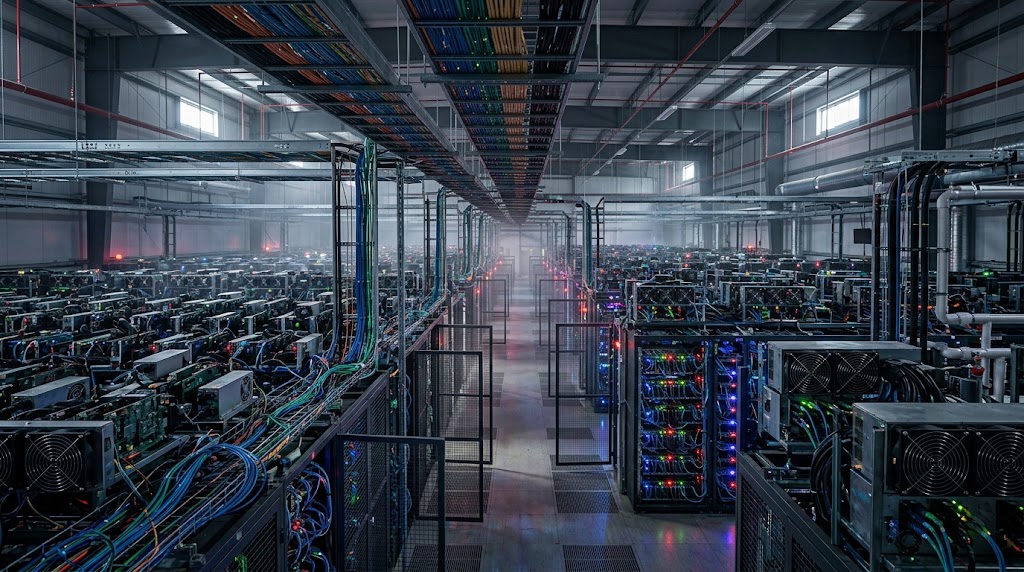
Corporate migration toward advanced high-performance data centers promised to grant operational relief across the decentralized protocol. However, computational pressure keeps breaking records as hashrate shrugs off the unplugging after rebounding past one zettahash per second, sustaining a competitive baseline that shatters all expectations of an algorithmic reprieve.
Prevailing assumptions held that redirecting wholesale power capacity toward machine learning workloads would soften operating friction for remaining miners. Empirical evidence contradicts this narrative: the network registered an aggregate difficulty increase exceeding 11%, demonstrating that corporate reallocation failed to reduce systemic mining competition.
This structural resilience stems from international machinery redistribution. When publicly traded entities decommission application-specific units to accommodate machine learning servers, aggregate processing power does not vanish. Corporate equity pivots toward artificial intelligence, but displaced silicon finds immediate homes across private facilities operating within low-cost energy enclaves.
Publicly listed mining firms decommissioned more than 1.5 billion dollars worth of cutting-edge hardware, including massive tranches of the Antminer S21 series. Despite this apparent industrial retreat, verified metrics from alternative finance computational records confirm that total network hash capacity absorbed the void without suffering prolonged structural contraction.
These decommissioned ASIC units avoid long-term warehouse storage. Instead, they enter highly active secondary brokerage channels where brokers liquidate operational fleets at considerable discounts relative to primary manufacturer prices.
This trade dynamic explains why miners sell their reserves to bankroll technological retrofits, while medium-sized operations and non-public enterprises acquire discounted fleets to energize them where extreme power economics prevail.
Receiving installations operate predominantly where stranded hydroelectric assets or unmonetized natural gas reservoirs exist. Across regions like western Texas and the Paraguayan Chaco, marginal energy tariffs dictate profitability for non-corporate miners paying electricity rates under three cents per kilowatt-hour, accommodating compressed margins that public operators cannot sustain.
The secondary hardware ecosystem eliminated any prospect of reduced difficulty. Hardware never leaves the grid permanently; it merely shifts into the balance sheets of agile operators unburdened by quarterly reporting mandates or institutional equity pressures.
Operational compression for pure-play Bitcoin miners
This operational redistribution widens the economic performance divide between diversified high-performance computing centers and dedicated Bitcoin miners. Participants adhering exclusively to block validation face punishing baseline overhead, amplified by post-halving subsidy cuts and unrelenting baseline computation thresholds.
Empirical studies regarding decentralized protocols confirm that hash power inevitably migrates toward electricity sources lacking competitive alternative uses. Historically, every structural liquidation cycle among public operators has expanded the relative share of miners anchored to stranded energy resources.
The historical shock of 2021 provides valuable perspective. Following the regulatory shutdown across China, difficulty plummeted by 54% due to severe international logistical delays. In contrast, modern secondary trading channels process ownership transfers and cross-border hardware redeployments within mere weeks.
Consequently, evaluating whether bitcoin mining entities will disappear misinterprets an industrial transformation that actually accelerates computational reallocation toward regions offering superior thermodynamic efficiency.
An alternative analytical perspective suggests this equipment redistribution offers only temporary stability. Analysts defending this position argue that high-performance enterprise computing will gradually monopolize accessible high-voltage substations, pricing secondary miners out of the cheap wholesale electricity required to operate depreciating equipment profitably.
This counterpoint presents compelling logic. Securing multi-year capacity agreements with institutional artificial intelligence providers yields predictable dollar-denominated cash flows, insulating corporate balance sheets from token volatility and raising the opportunity cost of dedicating megawatts to cryptocurrency validation.
Nevertheless, that thesis collapses if artificial intelligence capital expenditures experience cyclical deceleration, or if transaction fee density surges, reestablishing the comparative advantage of block verification over generic server hosting contracts.
Meanwhile, operational margins punish traditional operators as onchain records of onchain balances across miners show that institutional treasury liquidations facilitate high-performance upgrades without diminishing overall industrial capacity across decentralized mining farms.
The transition toward high-performance computing fortified public corporate balances, yet left pure-play operations trapped in severe attrition. Sustained profitability now belongs exclusively to lean structures capable of securing stranded kilowatt-hours at baseline clearing rates.
Furthermore, federal data detailing industrial energy consumption patterns confirms that computational processing facilities continue to register sustained growth across power grids characterized by surplus regional generation.
Protocol resilience remains decoupled from corporate structure, anchored instead to the continuous distribution of physical computation across the most economical peripheries of global energy infrastructure.
If monthly difficulty adjustments continue averaging cumulative increases above 2% over the next two quarters, it will confirm that secondary hardware markets reliably neutralize corporate fleet retirements as long as marginal electricity tariffs in remote jurisdictions remain below 35 dollars per megawatt-hour.
This article is for informational purposes and does not constitute financial advice.