
ETHZilla launches Eurus Aero Token I: What is it about?
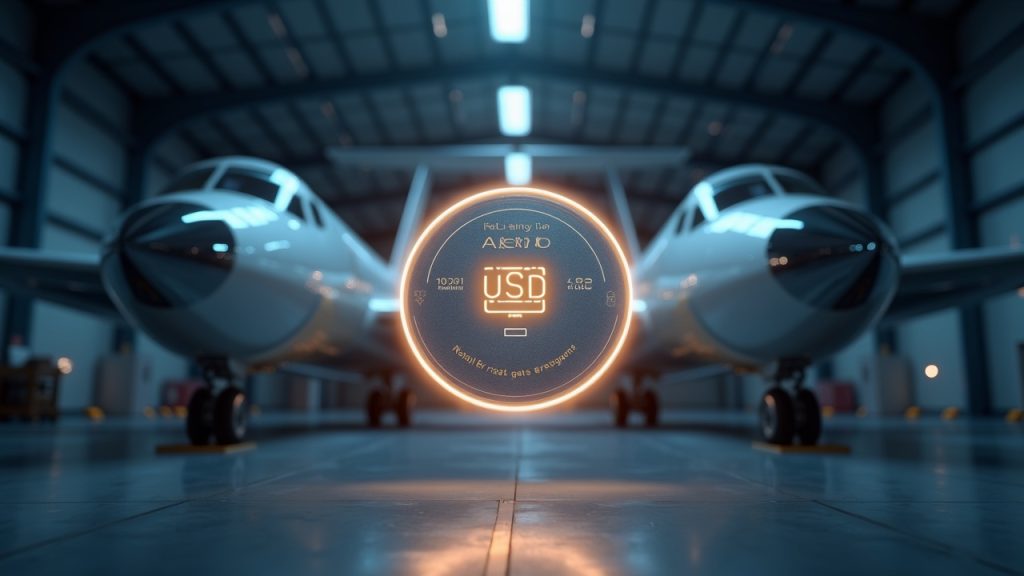
ETHZilla Corporation launched Eurus Aero Token I, aiming to give investors fractional ownership and a share of the lease revenue from its jet engines. The move is part of a broader shift from a treasury model on Ethereum to the tokenization of real-world assets (RWAs), a strategy the company says seeks to diversify revenue streams and address recent liquidity and valuation pressures.
According to ETHZilla’s disclosures, the Eurus Aero Token I is backed by two CFM56 commercial engines acquired for approximately $12.2 million and currently leased to a US airline. Each token is priced at $100 and represents a proportional share of the ownership of the engines, as well as the receivables from the lease agreements, associated reserves, and insurance coverage. The issuance is targeted at accredited investors and was deployed on Arbitrum, with distribution through platforms such as Liquidity.io.
Specifically, it aims for an annual return of around 11%, funded by the monthly lease payments. In this way, ETHZilla is attempting to transform a traditionally illiquid asset, such as aircraft engines, into a tradable instrument with secondary liquidity potential.
However, the token launch coincides with significant changes in the company’s balance sheet. At the beginning of the year, the firm completed a $425 million private investment (called “ETH PIPE”) and sold 114.5 million ETH from its treasury to pay down debt. It also reported robust current and quick ratios (10.07) and a debt-to-equity ratio of 1.23. However, the company itself has acknowledged that its market capitalization is sensitive to the success of its real-world asset tokenization (RWA) strategy.
Market validation and next steps for ETHzilla
Despite its innovative potential, there are clear risks. First, liquidity in secondary markets will be crucial: without sustained trading volume, the “tokenized liquidity” narrative could weaken. Second, regulatory classification presents a complex challenge, given that the intersection of financial securities, aerospace finance, and blockchain may entail stringent registration, KYC/AML, and regulatory compliance requirements across multiple jurisdictions.
Furthermore, asset and counterparty risk are central. The cash flows that sustain the return depend on the lessee’s compliance and the stability of the aviation sector. Events such as defaults, airline insolvency, or higher maintenance costs would directly impact the token’s ability to sustain the promised return. Added to this is reputational risk: if this first RWA product fails to achieve the expected adoption or returns, it could affect future tokenizations and the company’s overall valuation.
ETHZilla has described the offering as the “first tradable tokenized aviation assets,” a statement that positions the launch both as a product innovation and a public test of the model. Consequently, the market will evaluate not only the token’s financial performance but also the structural viability of converting industrial assets into openly traded digital instruments.
Ultimately, the performance of Eurus Aero Token I after its launch in mid-February 2026 will be decisive: its behavior in the market, the stability of its performance, and the response of regulators will determine whether the bet on RWA succeeds in stabilizing ETHZilla’s liquidity and supporting an eventual revaluation of the stock.