Layer 3 networks: Scaling Innovation or Just Adding More Complexity to Web3?
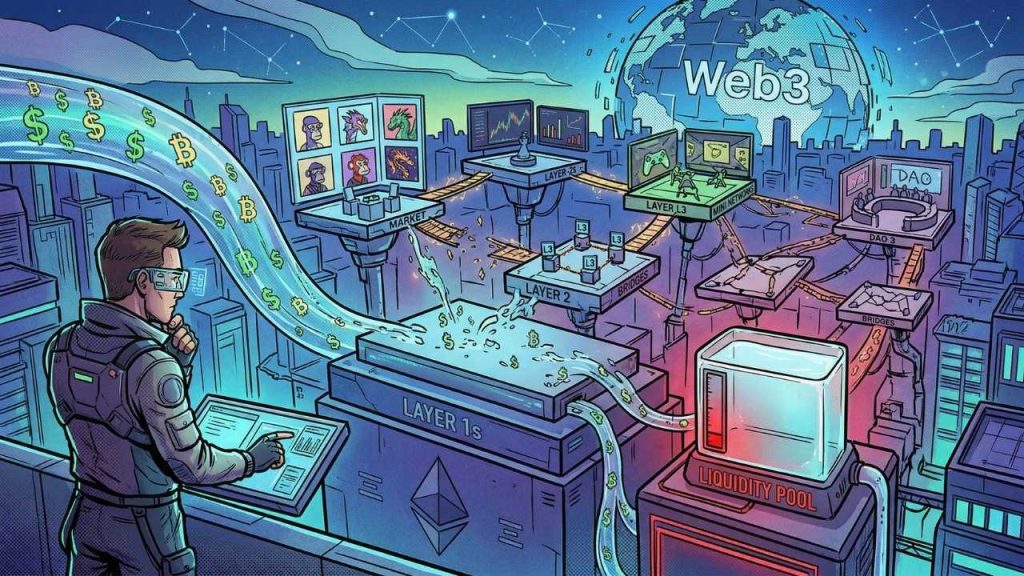
The blockchain industry is going through a phase of technical introspection where Layer 3 networks emerge as the ultimate solution. This phenomenon seeks to resolve bottlenecks through hyper-specialization layers built upon existing infrastructures of massive scaling and decentralized security protocols.
However, the massive deployment of these solutions raises questions regarding capital efficiency. The proliferation of these environments suggests a risk of dispersion that could compromise the end-user experience soon within the decentralized ecosystem. This development requires careful observation of market dynamics.
The technical promise of specialization
The concept of Layer 3 networks is based on creating customized environments for specific applications. By operating on top of a layer 2 rollup, these structures allow for a drastic reduction in costs transactions, optimizing processes that require constant high data throughput and performance.
This architecture facilitates development in sectors such as gaming and rwa tokenization. By inheriting security from the lower layers, developers can focus on specific business logic details without worrying about the general congestion of the Ethereum main network or its primary scaling layers.
This technical approach is detailed with precision in the Arbitrum Orbit Documentation, which explains how these customized networks function. The flexibility to define governance parameters and native gas tokens represents an unprecedented structural innovation within the cryptographic industry and its broader financial context.
The dilemma of dispersed liquidity
Far from being a perfect solution, the implementation of multiple Layer 3 networks fragments the available capital. Each new layer creates an isolated ecosystem where liquidity must be attracted from scratch, generating friction in asset exchanges across global digital markets and decentralized platforms.
While it is true that scalability improves, the panorama suggests that capital becomes less efficient. Users must manage complex bridges to move funds, increasing the security risks in bridges that have historically been vulnerable to external cyber attacks and smart contract exploits.
This fragmentation phenomenon resembles the interoperability issues seen in previous market cycles. The need for a strong web3 literacy becomes fundamental so that users can understand the dangers of financial dispersion within these deep layers of the modern technological stack.
Interoperability and cost analysis
The viability of Layer 3 networks strictly depends on their ability to communicate with each other natively. Without efficient messaging protocols, these layers run the risk of becoming technological islands without utility for the average user of the digital asset market and decentralized finance.
The implementation of zero-knowledge proofs is a key technical piece in this unification process. These proofs allow for massive transaction validation, ensuring that the transfer of information is fast and affordable between the different sub-layers of the current blockchain ecosystem and its scaling solutions.
Under this perspective, the Ethereum Scaling Roadmap highlights the importance of rollups as a foundation for higher layers. The integration of these technologies must prioritize reducing transaction latency levels to maintain competitiveness against centralized payment infrastructures and legacy financial systems.
Lessons from previous expansion cycles
Comparing the rise of Layer 3 networks with the proliferation of alternative chains in 2021 is enlightening. Back then, the search for low fees led to a disorganized expansion that ended in a massive loss of value for less experienced investors and retail market participants.
The current scenario is different due to the maturity of available development tools. Nevertheless, history demonstrates that the accumulation of technical layers does not always translate into organic adoption if operational complexity exceeds the perceived economic benefits for the end-user.
Projects driving modular development, as seen in the Polygon CDK Documentation, attempt to mitigate these past errors. The standardization of components seeks to prevent growth from being chaotic and ensure a solid foundation for the deployment of future decentralized applications and services.
Towards a model of verifiable efficiency
The success of Layer 3 networks will not come from their theoretical processing capacity, but from their actual utility. If institutional capital flows remain stable within these layers for the next eighteen months, we could confirm a maturation of the model that currently governs specialized blockchain scaling.
Consequently, it is essential to observe the development of appchains and their integration with larger ecosystems. The ability to attract real users will depend on making the technical complexity completely invisible for those simply looking to perform a fast and secure financial transaction without technical friction.
Everything points to the fact that technological convergence will be necessary to avoid collapse due to fragmentation. The Optimism Superchain reports propose a future where multiple layers share security and liquidity in a transparent and efficient way for all global market participants and institutional entities.
In conclusion, third-layer infrastructure represents a risky but necessary bet for growth. If interoperability is not resolved through open standards, these networks could be remembered as an unnecessary protocol complication instead of the innovation that Web3 requires to reach mass adoption.