
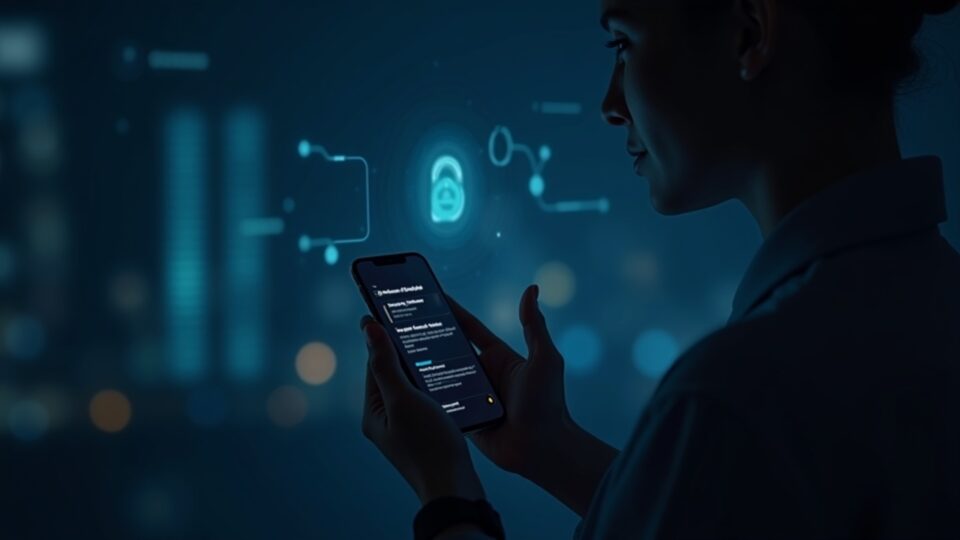
Tether, the company behind the world’s largest stablecoin, has officially unveiled Tether’s new health app called QVAC Health. Paolo Ardoino, the company’s CEO, announced that this tool uses artificial intelligence to allow users to manage their wellness data privately. The launch marks a crucial milestone in its technological expansion beyond traditional finance.
The application offers advanced features to monitor vital metrics such as steps, sleep, and nutrition, operating under a strict computer security protocol. Unlike other popular platforms, QVAC Health keeps all information encrypted and stored exclusively on the device of the user, without sending it to the cloud. Thus, it ensures that sensitive data is not commercially exploited by third-party advertisers.
This development is based on the QVAC platform, a decentralized artificial intelligence infrastructure created to execute complex tasks locally. By eliminating reliance on central servers, the firm proposes a new standard where powerful hardware does not compromise people’s individual privacy. This strategy seeks to offer a real and secure alternative to the closed ecosystems of big tech companies.
The technological expansion strategy towards total decentralization
The foray into digital wellness is part of a broader vision to build resilient and completely decentralized technological infrastructure. Ardoino highlighted the importance of giving control back to users, challenging business models that monetize personal information currently. Thus, the enterprise uses its vast financial resources to diversify its direct impact on the daily lives of global consumers.
In addition to software, the company has intensified its investments in advanced hardware, including a strategic stake in the robotics firm Generative Bionics. Recently, they invested in a 70 million euro round to develop intelligent humanoid robots, with industrial deployment plans scheduled for the next operating year. Likewise, they acquired a majority stake in Blackrock Neurotech for 200 million dollars, merging biology and technology.
How will this diversification impact the company’s future?
Integrating private artificial intelligence into consumer devices represents a significant shift in the protection of sensitive biometric data. By processing information locally, the risks of massive breaches that frequently affect other companies in the tech sector are mitigated. Consequently, users might prefer these solutions that guarantee sovereignty over their own information in an increasingly vulnerable digital environment.
For the crypto market, these moves demonstrate how capital generated by stablecoins can fund tangible innovations in the real world. With reserves of 186 billion dollars, Tether positions itself as a multifaceted tech conglomerate, reducing its exclusive dependence on the traditional digital asset market. It will be essential to observe the mass adoption of these tools to validate the success of this ambitious corporate transformation.
