
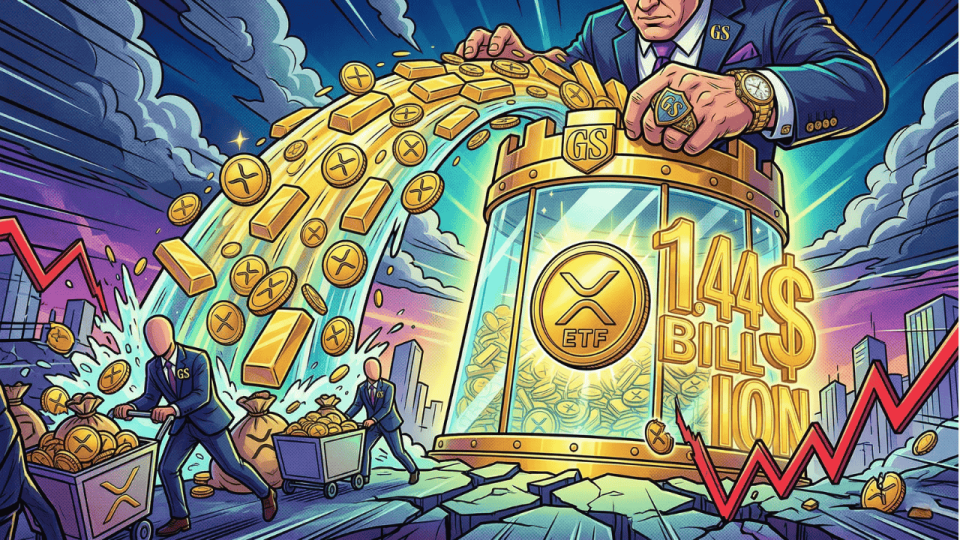
According to data provided by James Seyffart from Bloomberg Intelligence, XRP ETFs have accumulated 1.400 billion dollars in total net inflows. This financial milestone, reported on March 10, 2026, consolidates the institutional narrative of the asset. Such behavior reflects that the confidence of major investors remains unchanged despite current systemic corrections.
Analyst James Seyffart highlighted that these financial instruments have demonstrated surprising strength despite the price correction. Although the spot price experienced a significant pullback, the flow of capital did not stop at all. According to these recent data, the cumulative figure stands at 1.44 billion dollars during this first quarter.
Institutional resilience against the volatility of the underlying asset
Recent 13F regulatory filings with the Securities and Exchange Commission have revealed the identity of the main institutional holders. Among the most prominent names is Goldman Sachs Group, which reported massive exposure. This level of commitment suggests that large financial firms maintain a constructive outlook on the future of the ecosystem.
Specifically, Goldman Sachs stands out for having the largest disclosed exposure, with positions exceeding 153 million dollars in total. Other renowned entities such as Millennium Management and Citadel Advisors have also reported purchases. However, Seyffart warns that the vast majority of investors do not file 13F forms, hiding the real volume.
Historically, the adoption of exchange-traded products usually precedes a stabilization of volatility, a phenomenon we observed in previous cycles with other digital assets. The underlying blockchain technology of XRP, added to the structure of a regulated fund, offers a necessary layer of legal security. This combination attracts capital managers who prefer to avoid risks of direct custody.
Can institutional capital flows sustain the price of the XRP token?
Despite the optimism in the funds, the asset is currently trading at $1.38, reflecting a daily drop of approximately 1.7%. This divergence between the spot price and institutional interest is a phenomenon worthy of deep analysis. Since prices have lost ground, the constant flow into ETFs suggests professional accumulation is happening.
Market analysis indicates that although the token lost 2% in the last month, demand in regulated markets remains constant. Asset managers seem to be taking advantage of temporary discounts to average their entries into the financial market. This dynamic strengthens the thesis that smart capital seeks value beyond the retail noise.
In addition to banking giants, firms like Logan Stone Capital and Marex Group have appeared in this list of institutions. These disclosures provide a partial but valuable insight into which companies are gaining exposure through regulated investment vehicles. It is likely that institutional participation is much broader than initially indicated.
To mitigate security risks, the use of these funds prevents common incidents related to any scam that affects private wallets. The market infrastructure is evolving toward a model where regulatory transparency dictates the flow of liquidity. This structural change is fundamental for the asset to reach new adoption highs during the year.
Looking ahead, investors should monitor quarterly reports and updates from the SEC. The sustainability of these inflows will be decisive for XRP to recover its resistance levels. The convergence between mass adoption and legal clarity will define the next cycle of economic growth for this ecosystem.
