Why Wintermute stopped operations in Bitcoin crash and the massive liquidation
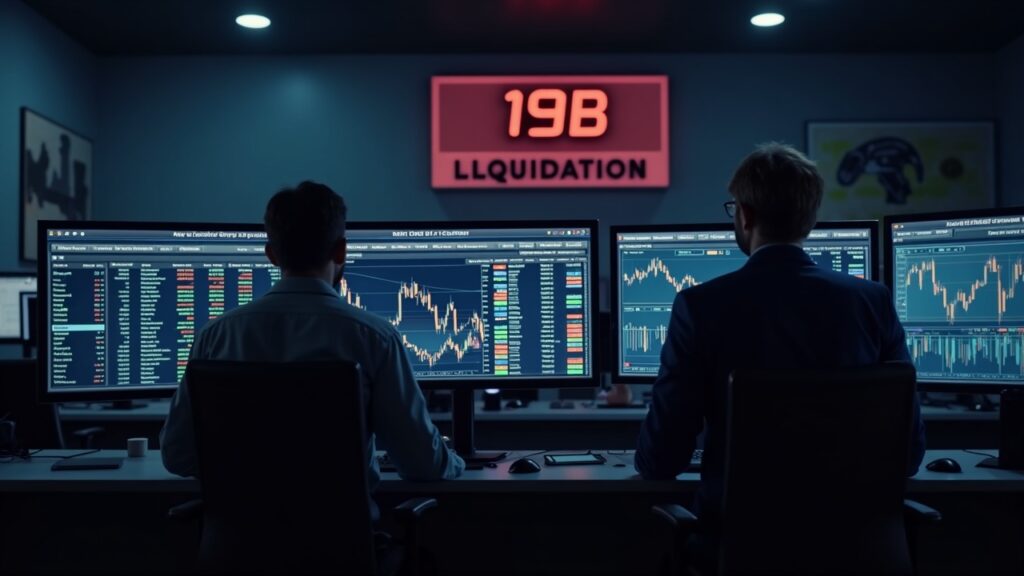
The prominent market maker Wintermute confirmed pausing its services during the recent extreme market volatility. Wintermute stopped operations in crash due to the breach of its internal hedging rules. Jasper De Maere, the firm’s strategist, explained this, pointing to the extreme speed of the liquidation cascade that affected the sector.
The extreme volatility event shook the market’s foundations. Over $19 billion in forced liquidations were recorded in 24 hours. De Maere detailed that the firm follows a “very rules-based approach.” The main goal is to maintain a “delta-neutral” hedge. This strategy seeks to nullify direct exposure to price movements. However, the violence and speed of the liquidations made it impossible to maintain. Jasper De Maere explained that when hedges (like short positions in perpetuals) are also liquidated, the strategy collapses. “It becomes difficult. Then you need to review your entire strategy,” he stated.
Market makers are essential to the digital asset economy. They provide liquidity by constantly buying and selling. This helps stabilize prices and reduce spreads. When they pause, as in this case, liquidity drastically disappears. This, in turn, exacerbates volatility and creates “gaps” in the order books. Other companies like LO:TECH also confirmed similar pauses. Marcus Horsley, their CTO, indicated that their risk “circuit breakers” were activated, automatically halting operations.
Could a new liquidation cascade paralyze the market?
The withdrawal of market makers has systemic consequences. Matthew Nay, an analyst at Messari, indicated this results in “tremendously less liquidity” in the order books. Greg Magadini of Amberdata added that it causes severe price fragmentation between different exchanges. Hedging becomes unpredictable. Magadini noted that the “auto-deleveraging” used by many exchanges, instead of insurance funds, was a key factor. Market makers could not trust their hedges, forcing their withdrawal.
The decision that Wintermute stopped operations in crash was not for speculation, but as a risk measure. De Maere was clear: “if we can make markets in a safe, delta-neutral way, we will.” This incident exposes the structural fragilities of the crypto market under extreme stress. Investors and regulators are watching closely. The debate now is whether exchanges must reform their liquidation systems to prevent future paralysis.