Analysis of 5 Altcoins with Strong Fundamentals to Reach All-Time Highs in May 2026
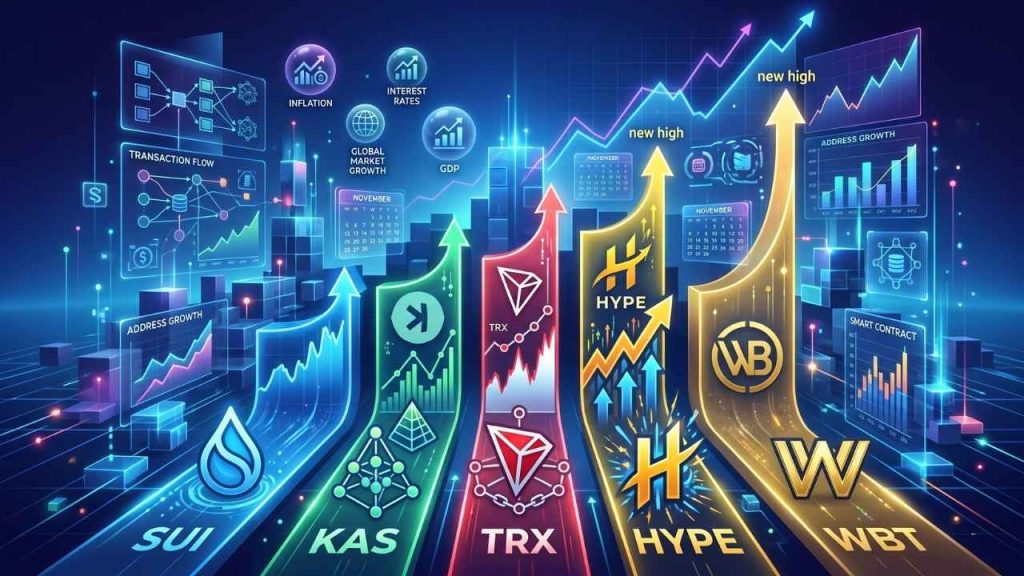
The digital asset market in May 2026 shows a structural divergence marked by the functional specialization of blockchain networks. The central thesis holds that liquidity is leaving speculative projects to concentrate on ecosystems with verifiable cash flows and high technical scalability.
This capital rotation occurs while US Bitcoin ETFs add 167 million in net inflows, evidencing institutional consolidation. The selected altcoins present real adoption metrics that surpass media noise, positioning themselves to pierce their historical price ceilings during the upcoming weeks of financial activity.
Sui has established itself as a benchmark in minimum latency thanks to its parallel execution architecture. According to the Sui ecosystem technical report, the network has maintained a finality time of less than 400 milliseconds, attracting institutional capital seeking operational efficiency and stability.
The object-processing capability allows for scalability that traditional account-based systems cannot easily replicate. Operational efficiency currently rewards markets, placing this currency in a privileged technical position to overcome its previous historical resistance levels and establish a new price discovery phase.
Kaspa represents the technological evolution of proof-of-work consensus through its BlockDAG structure. The GHOSTDAG protocol whitepaper details how this network allows for the coexistence of parallel blocks, eliminating hash rate waste and optimizing the overall system security.
Unlike other networks, Kaspa has not sacrificed decentralization for speed. The constant increase in its computing power suggests that miners anticipate significant revaluation, projecting that robust security drives the price toward new market discoveries before the end of the quarter.
TRON continues to dominate the stablecoin transfer sector, specifically in emerging economies with high inflation. The network processes daily volumes higher than many traditional payment networks, maintaining extremely competitive transaction costs for the average user.
This practical utility generates constant token burning, reducing the circulating supply while the demand for USDT continues to grow. The sustainability of this network’s economic model is a determining factor, as structural deflation strengthens asset value against currencies with uncontrolled emissions.
Hyperliquid has transformed the perception of decentralized exchanges through its own optimized Layer 1 chain. The use of a high-performance matching engine that allows for a trading experience similar to centralized platforms is specified.
The HYPE token acts as the governance and utility pillar of this expanding ecosystem. By offering instant settlements and on-chain transparency, it attracts professional traders who avoid custody risks, proving that transparency attracts institutional capital in a recurrent and predictable manner.
WhiteBIT Coin (WBT) benefits from the comprehensive expansion of its exchange ecosystem and its own blockchain network. Data reflected in the WBT token utility analysis shows an increase in the retention rate of users who use the asset to reduce operational fees.
The growth of this platform in key regions has driven organic demand for the base asset. By integrating banking services with crypto assets, the platform ensures a constant flow of users, allowing mass adoption to generate bullish stability in a traditionally volatile market environment.
It is essential to contrast these projections with the reality of global asset flows. Currently, altcoins face persistent outflows of capital toward safe-haven assets, which could delay the breakout of historical highs if macroeconomic liquidity contracts due to Federal Reserve decisions.
The contrary view suggests that Bitcoin dominance could remain above 60% for longer than expected. If interest rates remain high, the appetite for risk in lower-capitalization assets will decrease, invalidating theses based solely on the technological development of the mentioned networks.
Historically, altcoin cycles usually follow Bitcoin’s consolidation after the halving. In 2021 and 2024, we saw similar patterns where projects with higher real utility were the first to recover, marking a clear path for investors who prioritize fundamental data over social media trends.
The maturity of the sector now allows for differentiation between promises and tangible results. The projects analyzed here have active mainnets, real transaction volumes, and developer communities that continue to build essential tools, reducing the uncertainty inherent in investing in emerging and volatile technologies.
If the volume of transactions on Layer 1 networks maintains its year-on-year growth of 15%, it is likely that the total capitalization of the altcoin sector will reach a new peak before June 2026. This scenario depends on global inflation remaining within the target ranges predicted by international financial organizations.
This article is for informational purposes and does not constitute financial advice.