A Bitcoin developer launches privacy-focused Nostr VPN utilizing cryptographic public keys
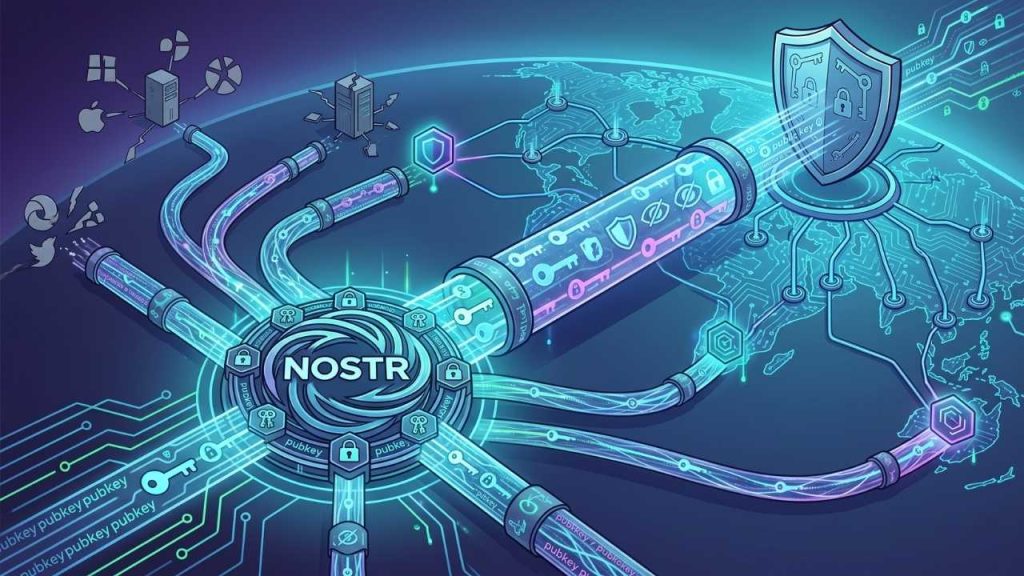
Finnish computer scientist Martti Malmi, one of the earliest collaborators of Satoshi Nakamoto, launched an updated version of Nostr VPN on May 19, 2026, which replaces centralized identity providers with public keys. This technical implementation aims to mitigate user data tracking by eliminating the requirement for email registrations and third-party authentication accounts managed by traditional technology corporations, drawing inspiration from overlay network architectures like Tailscale.
New version of Nostr VPN is out. Like tailscale, but no email addresses or 3rd party accounts, just public keys. New:
* native multiplatform user interfaces
* Nostr-based multihop routing (FIPS protocol) — very useful when NAT holepunching fails
* improved network management UX pic.twitter.com/nFFPBQb9Y6— Martti Malmi (@marttimalmi) May 19, 2026
Through an official announcement on X, Malmi explained that the platform incorporates a multiplatform interface designed for managing network configurations across multiple devices simultaneously. The system integrates a Nostr-based multi-hop routing mechanism that functions as a fallback infrastructure when direct peer-to-peer connections encounter data packet loss or connectivity disruptions.
Testing the Nostr VPN built by a Bitcoin OG and absolute legend.
Decentralized VPNs are freedom technology.
The more infrastructure we remove from centralized control, the harder it becomes to censor, monitor, or shut people out. https://t.co/FTAJtmU2EN pic.twitter.com/KIESAHaoBf
— 🇨🇭 Swiss Hodler (@SwissHodler) May 20, 2026
The deployment of decentralized routing solutions has gained support from various prominent figures within the cryptographic community. A well-known Bitcoin advocate pointed out that decentralized virtual private networks serve as critical tools for resisting digital censorship. From this perspective, removing central intermediaries drastically reduces the infrastructure exposed to direct regulation or data collection by corporate and state entities.
Technical background of the Sirius developer
Martti Malmi, historically recognized within the open-source community under the pseudonym “Sirius,” played a fundamental role during the foundational stages of the first global cryptocurrency between 2009 and 2011. During this timeframe, he collaborated directly with the anonymous creator of Bitcoin to design the first graphical user interface for the core software client.
Furthermore, Malmi was part of the small team that managed the Bitcoin.org domain and co-founded the Bitcointalk discussion forum, which originally launched as the Bitcoin Forum to centralize the community’s technical debates.
The evolution of privacy tools and authentication schemas based on public key cryptography coincides with broader structural discussions regarding blockchain network infrastructure. While software engineers seek to decentralize transport layers using Nostr, the underlying consensus architectures face ongoing evaluations against future computational advancements.
For instance, the industry actively analyzes long-term vulnerabilities in signature algorithms, a critical consideration given recent assessments stating that the cryptographic security of Bitcoin may require post-quantum adaptations before the year 2032 to prevent potential breaches in its hashing functions and cryptographic signatures.
Historical evolution of decentralized mesh networks
The development of virtual private networks based on mesh architectures is not an isolated phenomenon of 2026, but rather the culmination of over a decade of research into secure routing protocols. In 2013, ZeroTier was launched as one of the earliest commercial open-source alternatives dedicated to creating private cryptographic mesh networks.
By the year 2024, the organization reported steady adoption, surpassing 3 million connected devices across approximately 600,000 distinct network administrations and 5,000 paid corporate accounts, proving the operational scalability of decentralized models.
Subsequently, in 2017, an independent collective of open-source software developers launched the Yggdrasil network project. Unlike traditional virtual private network providers that channel internet traffic through central corporate hubs, Yggdrasil functions as a decentralized mesh network where each individual node assists in routing data packets using end-to-end encryption.
Similarly, in November 2019, the engineering team at the corporate communication platform Slack introduced Nebula, an open-source overlay networking utility that establishes direct encrypted tunnels between endpoints, removing the need to route traffic through a centralized company gateway.
Open-source developers plan to assess the stability of Nostr VPN’s multi-hop routing framework during a series of global network stress tests scheduled for the next quarter of 2026. The empirical performance metrics derived from this technical deployment will determine whether replacing traditional identity providers with cryptographic public keys can successfully mitigate the structural latency that has historically limited the widespread adoption of decentralized mesh networks.