Yield-Bearing Stablecoins: A Complete Guide to the New Era of Digital Money

In the traditional crypto ecosystem, holding liquidity in stablecoins like USDT or USDC entailed an invisible opportunity cost but corrosive: inflation. While the centralized issuers of these coins earn billions of dollars investing user deposits in Treasury bills, the final token holder receives nothing. Yield-bearing stablecoins have emerged to correct this structural inefficiency, democratizing access to institutional interest rates and transforming passive money into a productive asset.
Unlike speculative models, this sector does not promise magical returns. Conversely, it relies on financial engineering to transfer the yield from Real World Assets (RWA) or on-chain hedging strategies directly to the user’s wallet.
What Is a Yield-Bearing Stablecoin?
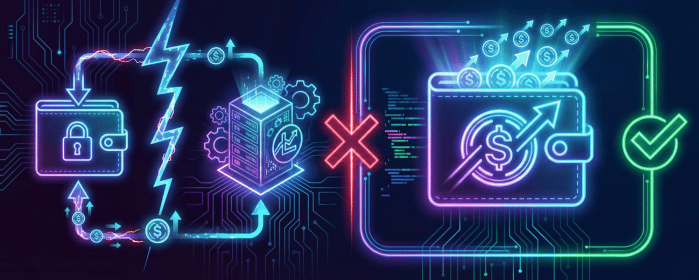
Yield-bearing stablecoins are digital assets pegged to the value of a fiat currency (usually the US dollar) that, in addition to maintaining their peg, automatically accumulate interest to their holders. If we break down this mechanism, we understand that they are not mere exchange chips, but tokenized debt instruments or shares in liquidity strategies.
Historically, to obtain yield in crypto, an investor had to lock their assets in lending or staking protocols, assuming additional smart contract risks. However, under the new paradigm of yield-bearing stablecoins, the yield is intrinsic to the token. The simple act of holding the asset in your wallet generates growth, eliminating active management.
Yield Bearing Stablecoins Meaning: The Fundamental Difference
The deep meaning of this shift lies in the ownership of the yield. While in traditional stablecoins (Legacy Stablecoins) the issuer keeps the interest generated by the collateral (Treasury Bills, Commercial Paper), in the yield-bearing versions, that interest flows to the end-user.
How Yield-Bearing Stablecoins Work
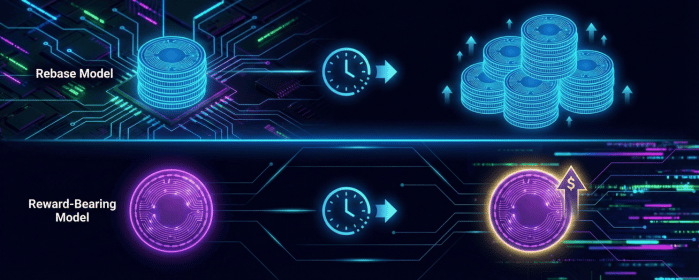
To understand the technical architecture behind these assets, we must analyze how value is captured and delivered. Although the user interface is simple, the financial backend is sophisticated.
Generally, there are two profit distribution mechanisms:
Rebase Model: In this system, the token balance increases automatically. If you hold 1,000 tokens and the yield is 5%, at the end of the year you will have 1,050 tokens, with each maintaining a value of $1.00.
Value Accrual Model (Reward-Bearing): Here, the number of tokens does not change, but the value of each token increases relative to the dollar. A token might be worth $1.00 today and $1.00013 tomorrow.
Under this technical premise, protocols like Mountain Protocol have standardized the use of regulated rebase mechanisms, allowing users to view their earnings in real-time without needing to perform “claim” transactions, which optimizes tax efficiency and reduces gas costs.
Types of Yield-Bearing Stablecoins
Not all yield-bearing stablecoins are created equal. The Source of Yield defines both the profitability and the risk profile of the asset.
1. Tokenized Treasury-backed
These are the safest category and closest to traditional finance. The protocol takes users’ dollars and buys short-term US Treasury Bills (T-Bills). Since the Fed pays interest on this debt, the protocol passes that payment on to token holders.
2. DeFi Lending-backed
These tokens represent deposits in decentralized lending markets. For example, by depositing a stablecoin into a liquidity protocol, you receive a token representing your deposit plus the interest paid by borrowers.
3. Synthetic Yield Strategies
These are the most complex and often the most profitable. They do not rely on government bonds but on market-neutral strategies, such as Cash and Carry (futures arbitrage).
4. Overcollateralized Yield-Bearing
They use excess collateral in crypto assets (like ETH) which is put to work in validation (staking) to generate a return that backs the stablecoin.
Leading Yield-Bearing Stablecoins (Yield Bearing Stablecoins List)
If you are looking for a reliable yield bearing stablecoins list, it is crucial to filter by transparency and auditing. Below, we analyze the main players dominating the current market.
Ondo Finance (USDY)
Ondo has positioned itself as an institutional bridge. Its token, USDY, is a tokenized note secured by short-term Treasury bonds and bank deposits. Unlike others, Ondo Finance structures its products with robust legal protections, offering an option for investors who prioritize security over aggressive returns.
Ethena Labs (USDe)
USDe has revolutionized the sector by not relying on traditional banks. It uses a “delta-hedging” strategy. Basically, it backs the token with staked Ethereum (which generates interest) and opens a short position in futures to protect against ETH price volatility. to dive deeper into their risks and mechanics, you can consult the documentation at Ethena Labs.
Mountain Protocol (USDM)
USDM stands out for being a regulated stablecoin that offers T-Bill yields through a daily rebase mechanism. It is ideal for users looking for operational simplicity and regulatory compliance.
Spark / MakerDAO (sDAI)
sDAI (Savings DAI) represents DAI deposited in the DSR (Dai Savings Rate). It leverages the income of the Maker protocol to pay interest to depositors, becoming a pillar of decentralized finance.
Comparison: Yield-Bearing vs. Traditional Stablecoins
To determine which offers the best stablecoin yield, we must compare the fundamentals against classic options (USDT/USDC).
| Feature | Traditional Stablecoins (USDT/USDC) | Yield-Bearing Stablecoins (USDY/USDe/USDM) |
| Source of Yield | None (Issuer keeps profit) | Treasury Bonds, ETH Staking, DeFi Lending |
| Primary Risk | Issuer Solvency / Censorship | Smart Contract Risk / De-pegging |
| Price Mechanism | Fixed at $1.00 | Rebase (Fixed $1) or Appreciation (>$1) |
| Target Audience | Fast Trading, Payments | Medium/Long-term Savings, DAO Treasury |
To visualize real-time data on the capitalization and current yield (APY) of these assets, analytics platforms like RWA.xyz are indispensable tools for any serious investor.
FAQ
Are yield-bearing stablecoins safe?
No asset is risk-free. While Treasury-backed models (Ondo, Mountain) are theoretically safer than synthetic strategies (Ethena), all carry smart contract risks and regulatory risks that do not exist when holding physical cash.
How are these yields taxed?
In most jurisdictions, profits generated by rebase or token appreciation are considered capital gains or investment income, similar to interest from a bank account.
Can I use these coins for trading?
Yes, but with nuances. Wrapped versions (which increase in price) are easier to integrate into AMMs (Automated Market Makers) than rebase versions, which can cause technical issues on some decentralized exchanges.
Conclusion
The transition toward yield-bearing stablecoins is inevitable in an environment where capital efficiency is a priority. It is no longer enough for money to be digital; it must be productive.
While traditional stablecoins will continue to dominate trading pairs due to their high immediate liquidity, assets like USDY, USDe, and USDM are rapidly capturing the treasury and savings market. Understanding the difference between government backing and a synthetic strategy is key to navigating this new financial standard successfully.
Last Updated: February 20, 2026