US Seizes $500 Million in Iranian Crypto Assets Under Operation Economic Fury
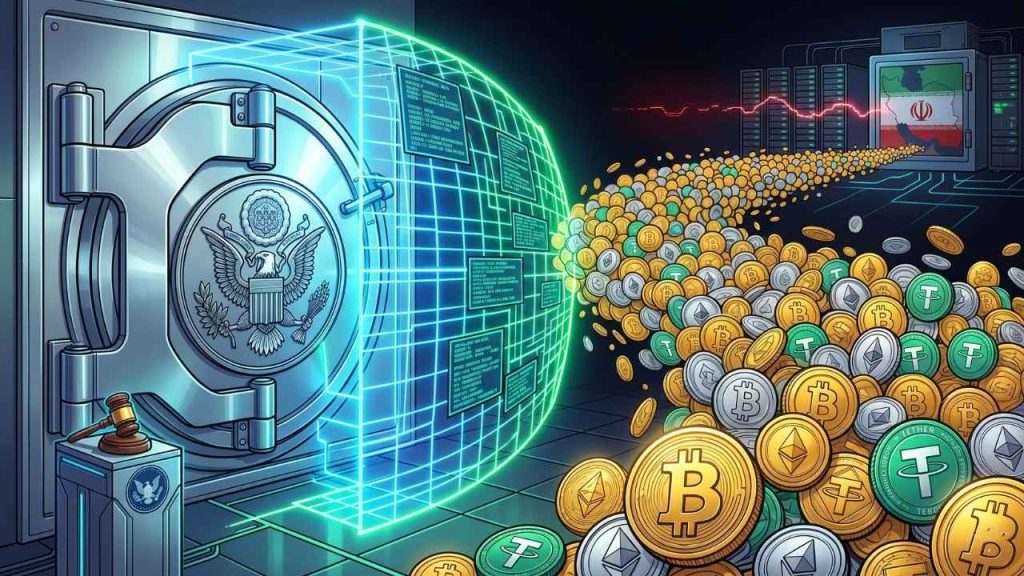
US Treasury Secretary Scott Bessent announced on Wednesday, April 29, 2026, that federal authorities have seized nearly $500 million in Iranian cryptocurrency assets. This figure is a sharp increase from the previously disclosed $344 million in frozen digital assets tied to the Tehran regime. The action is a cornerstone of Operation Economic Fury, a comprehensive financial pressure strategy launched by the Donald Trump administration in March 2025 to disrupt the capital flows funding Iran’s state activities.
Speaking on Fox Business’s “Kudlow,” Bessent explained that the Treasury Department is implementing an economic strangulation plan that includes freezing bank accounts globally and applying secondary sanctions to nations continuing to trade oil with Iran. The Secretary emphasized that the strategy is not limited to liquid assets on digital platforms but also targets retirement funds and overseas real estate held by Iranian officials. The announcement of this new seizure metric follows confirmation that stablecoin issuer Tether had previously frozen 344 million USDt at the request of US authorities.
The execution of Operation Economic Fury has had direct effects on Iran’s financial infrastructure. According to data presented by the Treasury, one of the country’s largest banks collapsed in December 2025, while the local currency has seen a devaluation of between 60% and 70% against the US dollar over the past year. The official Treasury release SB0477 details that on Tuesday, April 28, 2026, the Office of Foreign Assets Control (OFAC) sanctioned 35 entities and individuals belonging to the so-called “shadow banking network.”
Under Economic Fury, @USTreasury will continue to systematically degrade Tehran’s ability to generate, move, and repatriate funds.
Treasury’s Office of Foreign Assets Control is sanctioning multiple wallets tied to Iran — resulting in the freeze of $344 million in…
— Treasury Secretary Scott Bessent (@SecScottBessent) April 24, 2026
This network is used by the Iranian regime to move funds clandestinely and evade international restrictions. OFAC’s actions have also targeted key logistics sectors, including a Chinese oil refinery and approximately 40 shipping firms operating as part of the “shadow fleet” tasked with moving Iranian crude to markets in Asia. According to Scott Bessent’s official post, since February 2025, the Treasury has sanctioned over 1,000 persons, vessels, and aircraft related to Iran.
The Role of Crypto in Geopolitical Conflict
The use of digital assets has become a critical point in Tehran’s economic survival strategy. Earlier in April 2026, reports emerged regarding an Iranian government proposal to charge Bitcoin tolls for ships passing through the Strait of Hormuz. According to details of this initiative, loaded tankers could be forced to pay a fee of approximately $1 per barrel of oil transported via cryptocurrency transfers, while empty ships would be granted free passage. While the Iranian government has not issued a public confirmation of the mass implementation of this measure, financial intelligence reports suggest that revenue has already been collected under this concept.
Despite these tensions, the global digital asset environment has shown resilience in the face of geopolitical volatility. Recently, the crypto market cap rose to $2.42 trillion, driven in part by expectations of a de-escalation in direct hostilities. Nevertheless, the Treasury Department maintains its vigilance over the use of USDT and Bitcoin for purchasing critical components. Among those recently sanctioned are 14 individuals and companies linked to the supply chain for Shahed-series drones and ballistic missile propellants.
The sanctions environment has given rise to new forms of cybercrime. Maritime risk firm Marisks has warned of fraudulent actors who, taking advantage of the confusion in the Strait of Hormuz, impersonate Iranian security services. These groups contact owners of stranded vessels to demand payments in Bitcoin or USDT in exchange for navigation clearances. US authorities have urged companies in the sector to verify any official communication channels to avoid falling victim to these extortions.
The discrepancy between the $344 million initially reported by Tether and the $500 million confirmed by Bessent suggests that the Treasury Department has successfully identified and secured additional wallets that do not rely exclusively on centralized stablecoin issuers. So far, the Treasury has not detailed whether these additional seizures consist of Bitcoin, Ethereum, or other decentralized assets that make direct blocking by third parties more difficult.
The US administration is expected to continue expanding the list of sanctioned wallets in the coming weeks as the analysis of financial flows from the 35 entities recently added to the OFAC list progresses.
This article is for informational purposes and does not constitute financial advice.