Canada proposes ban on crypto ATMs to combat rising financial fraud
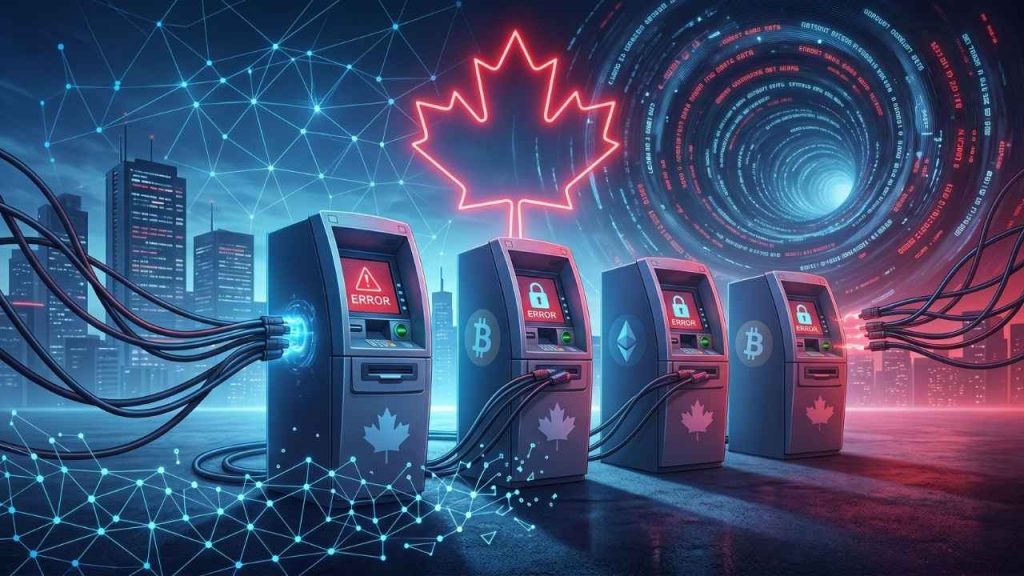
The Government of Canada introduced a legislative proposal on April 28, 2026, to implement a ban on cryptocurrency ATMs across the country. The measure, detailed in the Spring Economic Update 2026, follows a national security assessment identifying these machines as critical tools for executing scams and processing illicit capital. According to the official document, the state seeks to mitigate financial risks for citizens by removing these physical access points.
Under the terms of this initiative, Canadian authorities plan to phase out standalone kiosks located in malls and gas stations. The Department of Finance argues that, unlike established money services businesses with physical branches, ATMs operate with a level of technical oversight that facilitates relative anonymity in cash-to-digital asset transactions. The proposal does not ban the purchase of crypto assets but restricts acquisition channels to regulated platforms operating under stricter compliance standards.
The country’s relationship with self-service infrastructure for virtual assets is long-standing, as Canadian soil saw the installation of the world’s first Bitcoin ATM in 2013. This historical milestone marked the beginning of a global industry expansion; however, government perception has shifted from technological innovation toward concerns for public safety. Regulators point out that the ease of use that initially drove adoption is now exploited by criminal networks to evade traditional banking controls.
Recent investigations by the Financial Transactions and Reports Analysis Centre of Canada (FINTRAC) claim that the use of these ATMs has been fundamental in the rise of romance scams and government impersonation fraud. Criminals often demand that victims deposit cash directly into the machines, resulting in an irreversible transfer of value to digital wallets controlled by the perpetrators. This trend has placed Canada under special scrutiny, given that the country currently accounts for 10.1% of the world’s cryptocurrency ATMs.
In the regulatory sphere, the proposed ban aligns with the new Canadian federal framework for stablecoins, which seeks to bring order to the sector of coins pegged to stable assets. This regulation requires any stablecoin issuer to register its operations with the Bank of Canada, maintain audited reserves, and guarantee immediate redemption of funds. The government considers clearing the ecosystem of high-risk access points, such as ATMs, a necessary step before the full implementation of these financial oversight rules scheduled for 2027.
The operational stability of companies managing these networks has also been under review due to private sector conflicts. For instance, Bitcoin Depot faced an $18.5 million arbitration award following technical incidents that affected service availability and generated significant legal disputes. These infrastructure issues have reinforced Ottawa’s stance on the lack of institutional robustness in the crypto-asset kiosk segment.
Technical challenges are compounded by intellectual property disputes affecting the software providers for these machines. In this context, Athena Bitcoin has faced federal lawsuits related to the alleged use of copyrighted code and trade secrets to operate its systems. For the Canadian government, this legal and technical instability among operators underscores the need for state intervention to protect the integrity of the national financial system.
As part of this general tightening, Parliament is also processing Bill C-25, which aims to ban cryptocurrency donations in federal politics. Lawmakers argue that the lack of absolute traceability in certain digital asset operations represents a vulnerability to foreign interference. By combining the removal of ATMs with restrictions on political financing and new rules for stablecoins, Canada is positioning itself as one of the jurisdictions with the most restrictive regulatory approach toward physical interaction points with crypto assets in North America.
This article is for informational purposes and does not constitute financial advice.